








Using mobile data in Namibia: what to expect
Namibia is one of Africa's most thinly populated countries, and its mobile coverage reflects that honestly: excellent in the towns, sparse across the vast desert and bush in between. MTC is the dominant operator, with Telecom Namibia also present, and the cities run reliable 4G/LTE — good enough for maps, messaging, bookings and photo uploads. 5G is minimal and not something to plan a trip around. The big-picture truth worth absorbing before you go is that Namibia is overwhelmingly a self-drive destination, and you'll spend hours on gravel roads far from any tower. A travel eSIM is still well worth it for the connected stretches and the towns, and it replaces steep international roaming with one fixed price — but go in expecting genuine offline gaps and prepare for them rather than being caught out. Sorting connectivity before you fly means one less thing to arrange in a country where the next shop might be three hours away.
Coverage across Namibia
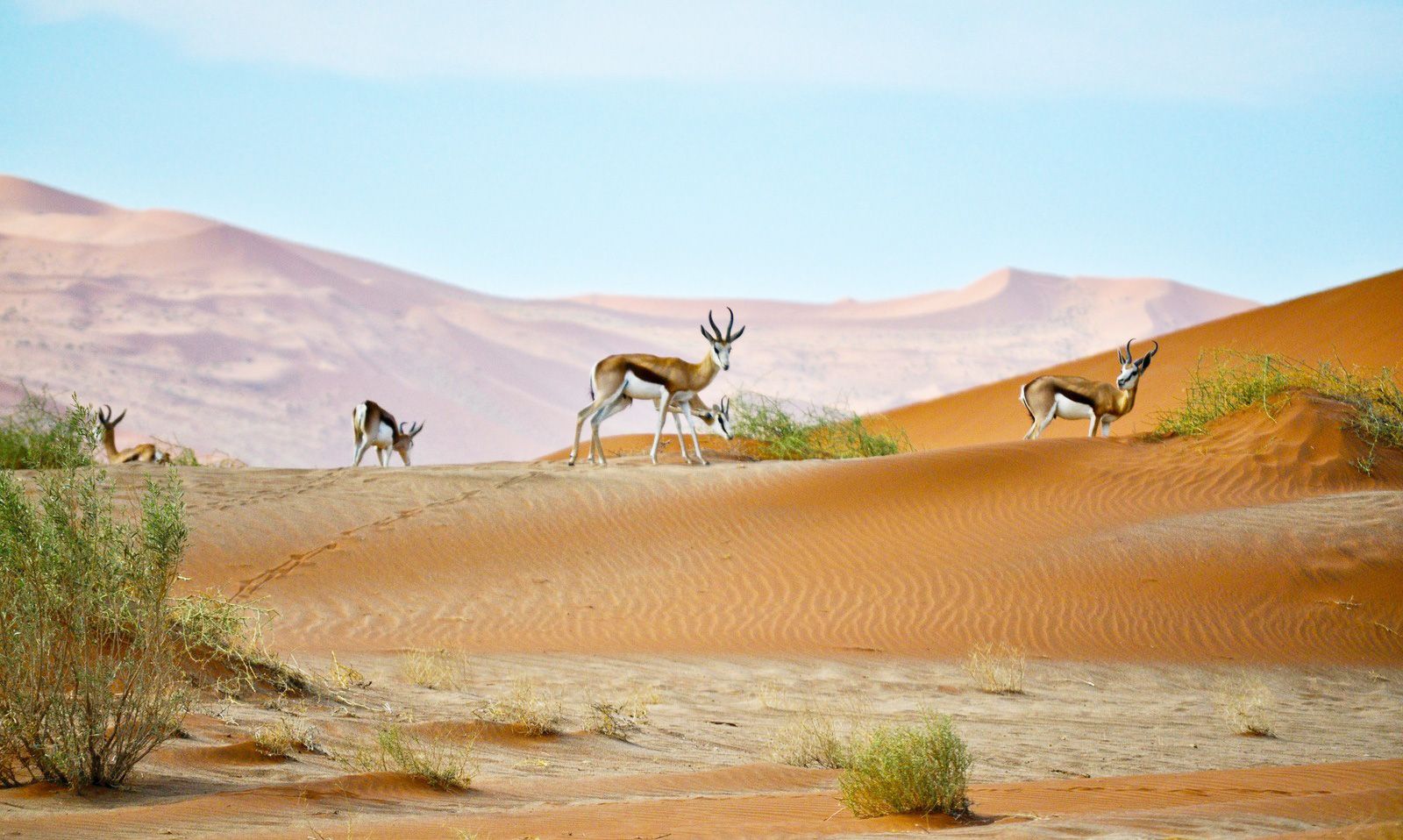
The strong signal lives in the towns and along the main tar roads. Windhoek, the coastal pair of Swakopmund and Walvis Bay, plus Otjiwarongo, Tsumeb and the B1 highway spine all have dependable LTE. Where coverage genuinely disappears is, frustratingly, exactly where most travellers are heading: the dunes around Sossusvlei and the Namib-Naukluft, the gravel approaches to Etosha (you'll get a signal at some rest camps but not out on the pans), the Skeleton Coast, the rock formations of Damaraland, the Fish River Canyon, and the far Kaokoland in the northwest. These gaps are not the exception — they're most of the country by area. The essential preparation is to download offline Google Maps covering your entire route, save your lodge phone numbers and directions to your notes, and treat live data as a town-only luxury you dip into between destinations.
How much data you'll need
Because so much of a Namibia trip is spent offline on the open road, total data use is often lower than the trip length would suggest. In the towns and at the connected lodges you'll use WhatsApp — the standard for reaching guides, lodges and tour operators — along with Google Maps and the browser for bookings and uploads. A typical one-to-two-week self-drive safari is comfortable on roughly 5-10 GB for most travellers. If you're working remotely from Windhoek or Swakopmund between game drives, or uploading lots of wildlife photos and video each evening, lean toward 15 GB or an unlimited-style plan so the connected nights don't drain you. The plans above show the live options — a mid-range bundle is the safe choice, with topping up available if your itinerary turns out heavier on data than expected.
Keep your number and WhatsApp
There's no need to swap out your home number for Namibian data. A dual-SIM phone runs the eSIM alongside your usual SIM: the eSIM carries the data while your home number stays active for calls, SMS and bank verification codes. WhatsApp stays on your existing number — which is important here, since lodges, guides and tour operators almost all coordinate over WhatsApp, and you'll want them able to reach the number they already have. Just turn your home SIM's data roaming off so only the eSIM uses data, and your home carrier can't quietly charge you while your phone hunts for a signal between towns. That one setting is the difference between a fixed cost and an ugly surprise on return.
Before you fly
Confirm your phone is eSIM-ready first — most iPhones from the XR on, plus recent Samsung Galaxy and Google Pixel models. Our compatibility checker tells you in seconds so you're not finding out at the airport. Install over Wi-Fi a day or two before departure; the plan stays dormant until it connects locally, then activates when you land at Hosea Kutako International (WDH) outside Windhoek. Because you'll lose signal almost as soon as you're out on the open road, take the time to download every offline map, lodge contact and route detail before you collect the hire car and leave the capital behind.
Crossing into a neighbour?
Self-drive routes from Namibia sometimes loop into a neighbouring country — the Chobe and Victoria Falls circuit, for instance, pulls travellers toward Botswana. Networks don't roam free across these borders, so if your itinerary crosses into Botswana or beyond, plan a separate eSIM for that country rather than expecting your Namibian plan to follow. For a Namibia-only safari, a single country plan keeps things simple and your costs fixed from the moment you land.