









Using mobile data in Italy: what to expect
Italy has a mature, competitive mobile market, so for a traveller the experience is genuinely good. TIM, Vodafone, WindTre and Iliad all run extensive 4G, and 5G is widespread across Rome, Milan, Naples, Turin, Florence, Bologna and the main tourist cities. That covers everything you'll actually do — maps, Trenitalia and ATAC transit apps, restaurant bookings, mobile banking, uploading photos from the Colosseum or the Uffizi. Italy is firmly in the EU, which matters: a travel eSIM bought for Italy typically includes roam-like-home access right across the EU, so the same plan keeps working if you slip over to France, Austria, Slovenia or anywhere else in the bloc on the same trip. The reason to use an eSIM rather than your home plan is simple if you're coming from outside the EU — no metered roaming surprises on your monthly bill, a clear allowance bought up front, and it runs alongside your normal SIM so your usual number stays reachable.
Coverage across Italy
Coverage is strong nationwide, with the only real soft spots being mountains, deep countryside and the inside of the long rail tunnels.
- Rome and Lazio: full 4G/5G across the city, the Vatican, Fiumicino and Ciampino airports and the regional rail lines. No issues.
- Milan and the north: excellent in Milan, Turin, Bergamo, Verona and across the Lombardy/Veneto corridor; reliable around Lake Como and Lake Garda's shoreline towns.
- Florence, Tuscany and Bologna: strong in the cities and main towns (Siena, Pisa, Lucca); expect signal to dip on the back roads through the Chianti and Val d'Orcia hills.
- Naples, the Amalfi Coast and Pompeii: good in Naples, Sorrento and Salerno; the coastal road to Positano and Amalfi can wobble around the cliffs and tunnels but is generally usable.
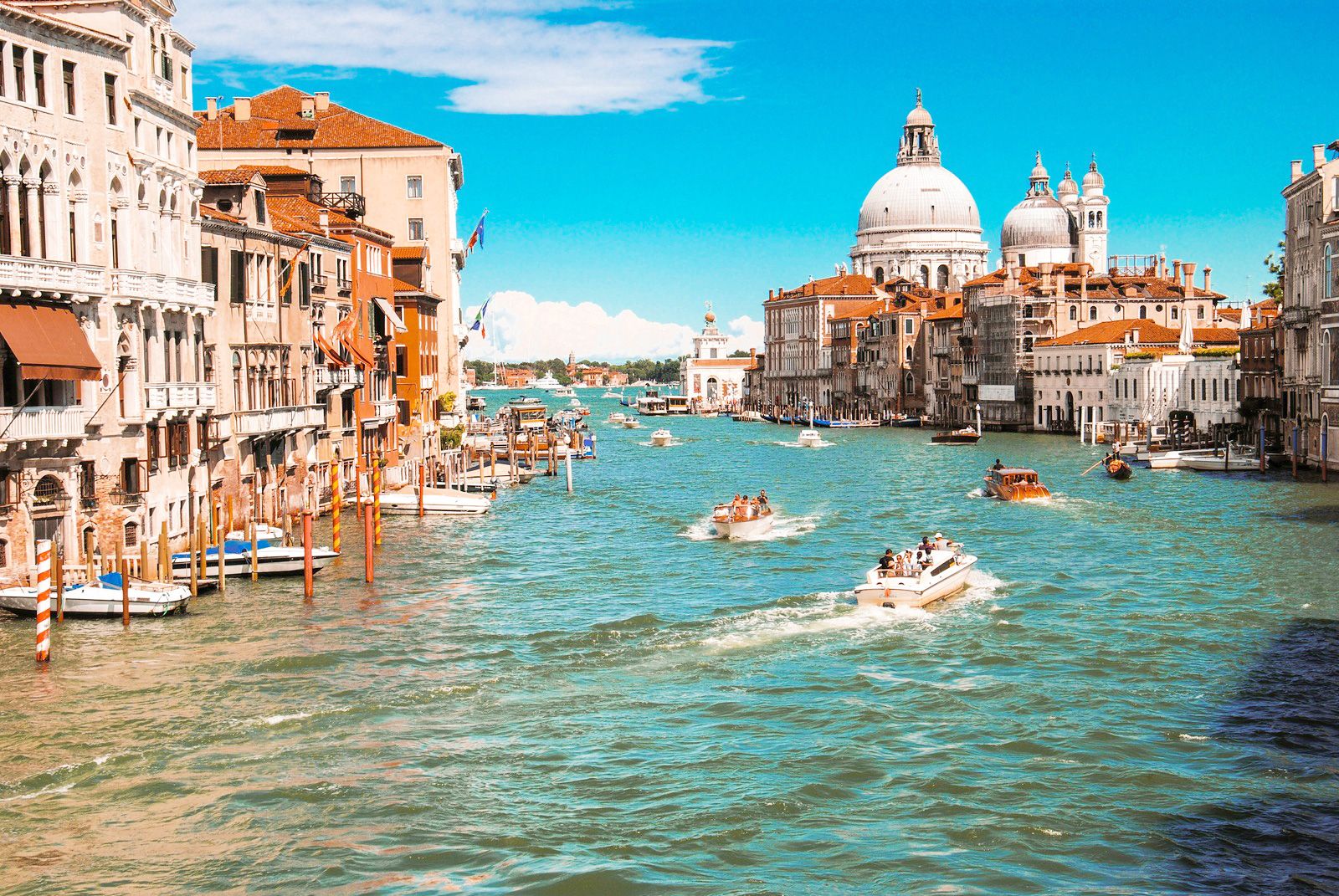
- Venice: solid across the islands and the lagoon vaporetto routes.
- Sicily and Sardinia: reliable in Palermo, Catania, Cagliari and the resort areas; thinner on the mountain interiors (the Madonie, the Gennargentu) and the most remote beaches.
- The Dolomites and Alps: good in the valley towns (Bolzano, Cortina) and weaker on the high passes and trails — carry offline maps for hiking.
How much data you'll need
City-focused Italy trips are moderate on data; multi-region or driving trips climb fast because of constant navigation and photo uploads.
- Single-city break (3–4 days): maps, transit apps, bookings, social posts — roughly 3–5 GB.
- Multi-city by train (1 week): Trenitalia/Italo apps, maps in each city, museum bookings and steady photo uploads — around 6–10 GB.
- Tuscany or Sicily road trip (1–2 weeks): non-stop Google/Apple Maps, parking apps, plus backing up a full camera roll of video — 10–15 GB is realistic.
WhatsApp, Maps and Instagram are the everyday core; it's photo/video sync and constant driving navigation that eat allowance. The plans above give you one up-front bucket — pick the tier that matches your route.
Keep your number and WhatsApp
You can keep your home line live the whole time. On a dual-SIM phone your normal SIM handles calls, SMS and bank 2FA codes, while the Italy eSIM carries the data. WhatsApp, Telegram and Signal stay attached to your existing number — no re-registration when you swap the data line. The one essential setting: turn data roaming OFF on your home SIM and set the eSIM as your data connection. That keeps you reachable on your real number with zero roaming charges.
Before you fly
Fast checklist. Confirm your phone supports eSIM — most iPhones from XS onward, plus recent Pixel, Samsung and Motorola devices; our compatibility checker confirms it instantly. Install the eSIM at home over Wi-Fi before departure; it won't use data until it connects to an Italian network, then it activates on arrival — whether you land at Rome Fiumicino (FCO), Milan Malpensa (MXP), Venice (VCE), Naples (NAP) or Bologna (BLQ) — so you're online before the train into town. Continuing around Europe? See our Europe eSIM hub, or for the next country a France eSIM.
Good to know: ZTL zones and tap-to-ride transit
If you're driving, one fact saves real money: most historic city centres (Rome, Florence, Milan, Bologna and dozens more) are ZTL limited-traffic zones — cameras fine non-residents automatically, and the tickets reach your rental company months later. A live data connection lets you check ZTL maps and parking apps before you nose into a centro storico. A practical tip on transit: in Rome and Milan you can increasingly tap a contactless card or phone straight onto the metro/bus gates, and apps like the ATM Milano or Trenitalia app handle tickets — keeping the eSIM connected means you skip the queue at the machines entirely.