







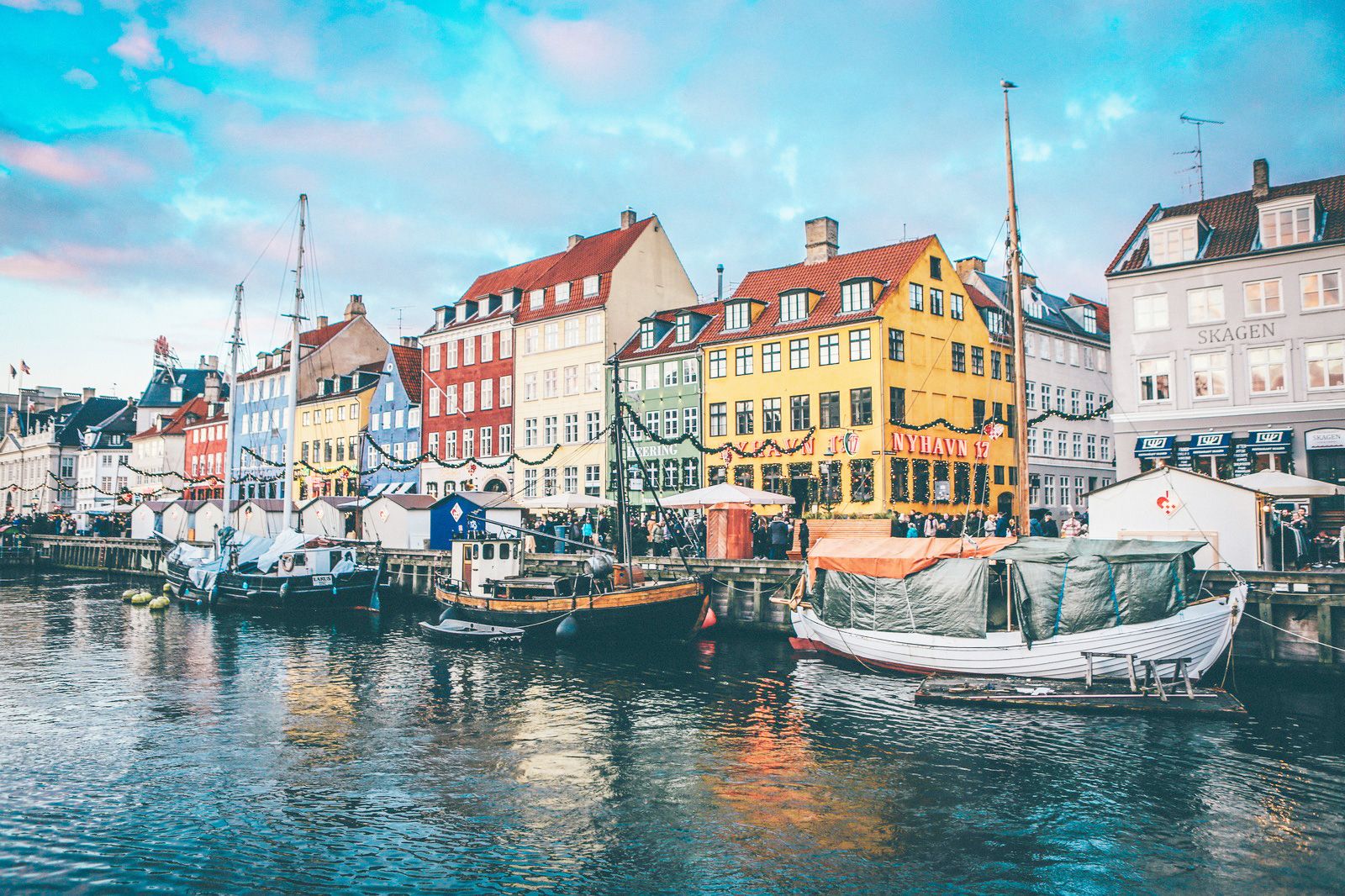


Using mobile data in Denmark: what to expect
Denmark is one of the easiest places in Europe to stay connected, and that has a lot to do with how digital daily life is here. Four operators — TDC, Telenor, Telia and 3 (Hi3G) — run mature 4G across the whole country, and 5G is now widespread in Copenhagen, Aarhus, Odense and Aalborg. For the things travellers actually do, that depth shows: pulling up the Rejseplanen transit app to time a Metro and bus combo, paying for almost everything with MobilePay or a tapped card, navigating the city bike lanes by Maps, calling a cab, or video-calling home from a Nyhavn café — all of it runs on fast, stable data essentially everywhere people live. A travel eSIM fits this country particularly well. Denmark is compact and you move a lot — between Zealand, Funen and Jutland, across the Storebælt and Øresund bridges, onto small-island ferries — and an eSIM means one tap of data that follows you the whole way without a single roaming charge. It also activates the second you land, so you're navigating out of the airport rather than hunting for a SIM kiosk.
Coverage across Denmark
Coverage is genuinely strong almost everywhere, which is rare enough to be worth stating plainly. Greater Copenhagen, the Øresund corridor over to Malmö, Aarhus and the main Jutland cities like Aalborg and Esbjerg all have dependable 5G. The Funen and Zealand countryside, the long road and rail links, and the Storebælt and Øresund bridge crossings stay connected throughout — you won't lose a navigation route mid-bridge. Where signal can dip is predictable and minor: parts of the smaller North Sea and Kattegat islands, remote stretches of the Wadden Sea coast around Rømø and Fanø, some of the quieter Bornholm interior far out in the Baltic, and the open-water sections of the longer inter-island ferries. None of it is dramatic, and none of it lasts long — but if you're driving out to Skagen at the country's northern tip, taking the ferry to Ærø, or cycling a remote stretch of the Baltic Sea Cycle Route, download an offline map first so a brief dropout never leaves you guessing.
How much data you'll need
Danish travel is light on data because so much of it runs on quick app interactions rather than heavy streaming. Expect to lean on Google Maps, Rejseplanen for transit, MobilePay for payments, WhatsApp and Messenger for staying in touch, Instagram, and the odd Too Good To Go food pickup. As a rough guide: a long weekend in Copenhagen is comfortable on around 3-5 GB; a one-to-two-week loop through Copenhagen, Aarhus, Odense and the coast usually lands near 8-15 GB; and remote work, hotspotting a laptop, or steady streaming on the train is happiest on an unlimited-style plan. The plans above show the live options — if you're unsure, pick a mid-size bundle, since topping up later takes only seconds and you avoid paying for data you never touch.
Keep your number and WhatsApp
You don't need to give up your own number to get a Danish data line. A modern phone runs the eSIM alongside your usual SIM in dual-SIM mode: the eSIM carries all your data while your home number keeps handling calls, SMS and bank one-time codes, and WhatsApp stays tied to your existing number with nothing to reconfigure. The one setting that actually matters is to switch your home SIM's data roaming off — that way it can't quietly rack up charges in the background while the eSIM is doing the real work. Your phone then uses the eSIM for everything data-related and your normal SIM purely for that incoming verification text from your bank.
Before you fly
First, confirm your handset supports eSIM — most iPhones from the XR onward, plus recent Samsung Galaxy, Google Pixel and Honor models qualify; our compatibility checker tells you in a few seconds so there are no surprises at the gate. Install the plan at home on Wi-Fi a day or two before you travel; it stays dormant until you arrive and then connects automatically when you land at Copenhagen (CPH), Billund (BLL) or Aalborg (AAL). Installing early on Wi-Fi matters because the one step that occasionally needs a stable connection is the initial download of the profile — do that at home and arrival is genuinely tap-free.
Crossing into the rest of the EU?
Because Denmark is in the EU, a regional Europe plan is worth a look if your trip continues over the Øresund bridge to Sweden or south into Germany — one eSIM stays online across those borders without any switching. For a Denmark-only trip, a country plan is the simplest and cheapest way to land connected.