









Using mobile data in Guinea-Bissau: what to expect
Guinea-Bissau is a small West African country and a genuinely niche travel destination, so it's worth being upfront: connectivity is functional in the capital and the main towns, and limited once you leave them. The market is served chiefly by MTN and Orange, with 4G available around the capital Bissau and a handful of urban centres, falling back to slower data elsewhere. For the kind of traveller who comes here — birders and naturalists heading for the Bijagós, NGO and business visitors, the occasional independent explorer — a travel eSIM earns its place by getting you online the moment you land, without negotiating a local SIM, a passport-registration step and a market-kiosk top-up during what is often a tight, once-a-day arrival window.
Set expectations sensibly. Data is fine in town for maps, WhatsApp and email; it is not built for heavy streaming, and it disappears as you move out toward the islands and the interior. That's part of the deal with travelling somewhere this far off the standard circuit.
Coverage across Guinea-Bissau
The strongest, most consistent signal is in Bissau itself and along the approaches to the capital. Larger regional towns such as Bafatá in the centre, Gabú toward the east and Canchungo to the northwest have coverage, though quality varies and an unreliable power supply can knock out a tower for a while. The mainland road network between these centres generally holds at least basic data near the towns, with gaps on the long empty stretches in between.
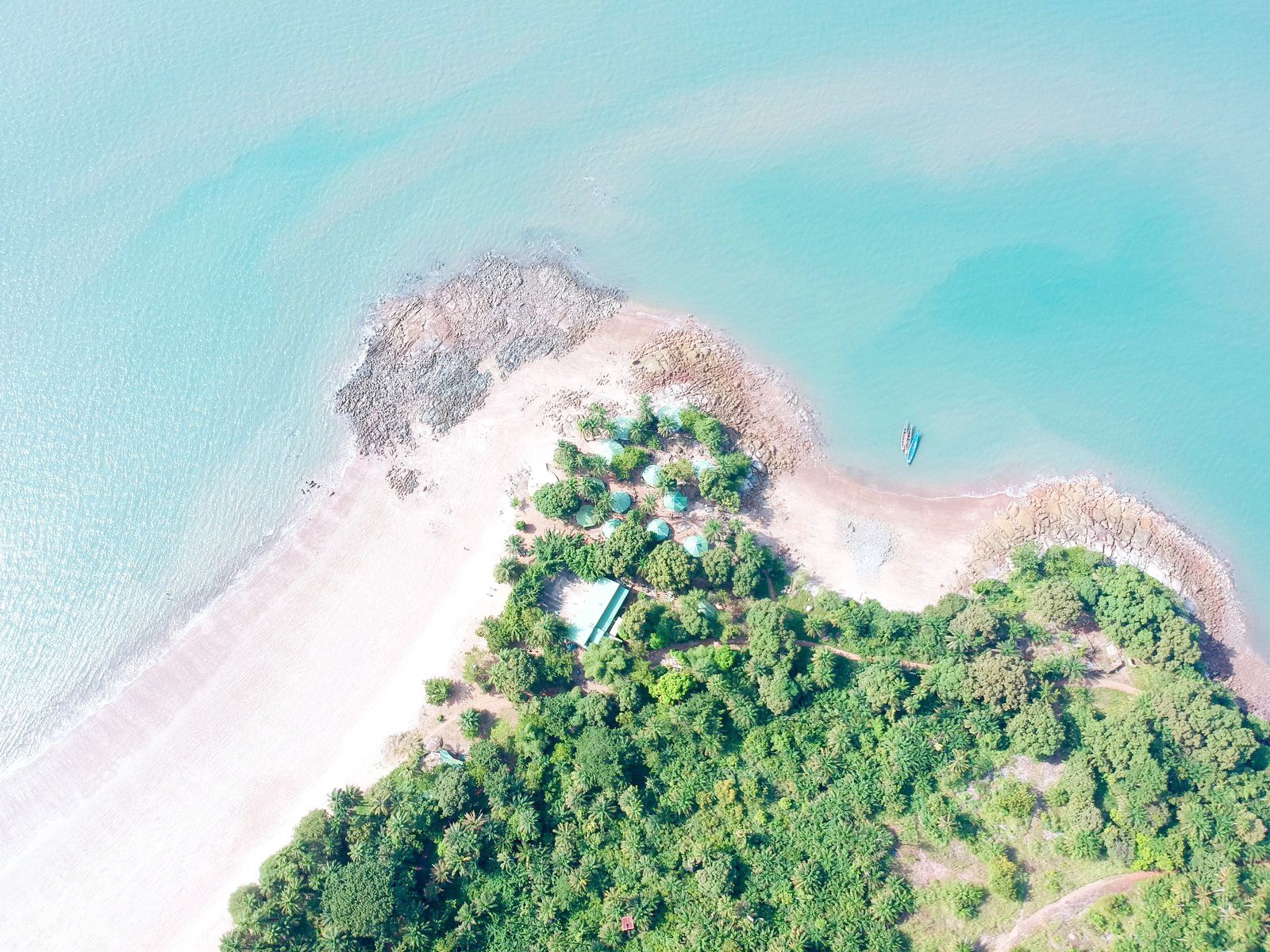
The honest weak spot is the Bijagós Archipelago — the country's main draw and a UNESCO biosphere reserve. Coverage on the islands is patchy at best: the gateway settlement of Bubaque can offer a usable signal, but many of the outer islands, the mangrove channels and the remote eco-lodges are effectively offline. Treat the islands as a deliberate digital break and sort anything time-sensitive — flights, transfers, money — before you leave the mainland. The same applies to remote stretches of the interior and the forest near the southern Guinea border, where you should not rely on a live connection at all. Carry offline maps and let your lodge know your plans rather than expecting to check in by phone.
How much data you'll need
This is a light-data destination. Realistic everyday use is WhatsApp — the default here for messaging and for arranging transport and boats — alongside email, Google Maps in and around Bissau, a translation app for Portuguese and the widely spoken Crioulo, and modest photo sharing. A short trip centred on the capital runs comfortably on 2–4 GB; a one-to-two-week visit that mixes Bissau with island time, where you'll often be offline anyway, rarely needs more than 5–8 GB. If you expect to send large photo or video batches, lean on lodge or hotel Wi-Fi whenever it's available rather than the mobile network. The plans above cover these ranges, and with a travel eSIM you avoid the eye-watering roaming rates that this corner of West Africa otherwise attracts.
Keep your number and WhatsApp
Use the eSIM alongside your usual SIM (dual-SIM): the eSIM carries your Guinea-Bissau data while your home SIM keeps your number reachable for calls, SMS and the one-time security codes your bank sends. WhatsApp — which does most of the communication heavy lifting here — stays on your existing number whichever line is providing data, so contacts and operators reach you as normal. Make sure your home SIM's data roaming is switched off so it can't generate charges in the background while the eSIM handles everything.
Before you fly
Confirm your handset supports eSIM first — most iPhones from the XR onward and recent Samsung, Pixel and Honor phones do; the compatibility checker settles it in seconds. Install the profile on Wi-Fi at home before you travel, since many routings reach Guinea-Bissau via Lisbon or Dakar with tight connections and limited airport Wi-Fi. It activates when you land at Bissau's Osvaldo Vieira International (OXB). If this is one leg of a wider West African journey — for example continuing overland or by air into Senegal — check whether a multi-country plan covers the whole route on a single eSIM.