








Using mobile data in Senegal: what to expect
Senegal is one of West Africa's more reliably connected countries, and the main operators — Orange (through Sonatel), Free and Expresso — give you solid 4G across Dakar and the larger towns. For everyday travel that means maps, WhatsApp, social media, mobile money and translation all work smoothly in the places most visitors actually go. 5G is at an early stage and not something to build plans around yet, but the 4G experience in the cities is genuinely good. A travel eSIM is the easy route for a short trip because buying a local SIM in Senegal involves ID registration, which is a chore when you've just landed; the eSIM skips that entirely by connecting on the operator's roaming layer the moment you arrive. The result is that you walk out of the airport already online — able to book a taxi, message your accommodation and check the route — instead of hunting for a kiosk and queuing with your passport.
Coverage across Senegal
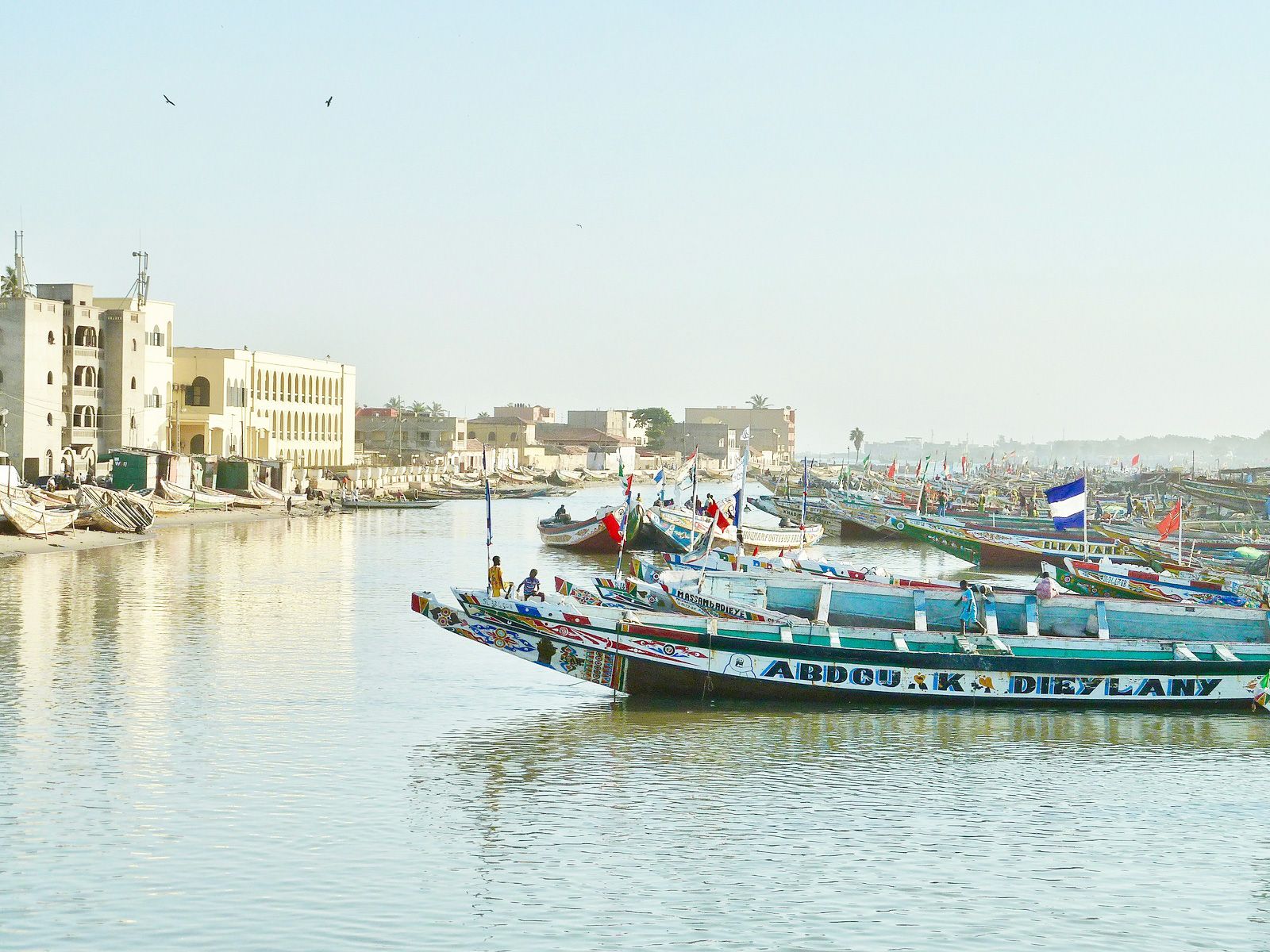
The strongest and most consistent coverage is in and around Dakar, including the downtown Plateau, the Almadies, and the peninsula stretching out toward Ngor and the western tip of the continent. The historic colonial town of Saint-Louis in the north, the holy city of Touba inland, the beach resort areas of the Petite Côte such as Saly, and the regional centres of Thiès and Ziguinchor down in the Casamance are all served well enough for normal travel use. The popular day trips from Dakar — Île de Gorée just offshore and the pink-tinged waters of Lac Rose — generally hold signal too, and the airport-to-city run is well covered. Coverage genuinely thins out on the long inland roads, across the dry Ferlo region, and in the more remote eastern reaches toward Tambacounda and the Niokolo-Koba national park, as well as out toward the desert north near the Mauritanian border. If you're driving down to the Casamance or heading up-country, expect gaps between towns and save your maps offline before you set off.
How much data you'll need
Senegalese phone life runs on WhatsApp above all — it's the default for both chat and calls — plus Facebook, mobile-money apps like Wave and Orange Money, Google Maps for getting around, and a translation app to bridge French, Wolof and your own language. That's a moderate data diet. As a rough guide, a long weekend in Dakar is comfortable on around 3–5 GB; a week or two taking in Saint-Louis, the coast and a trip down to the Casamance lands roughly in the 8–15 GB range; and heavier streaming or remote work means sizing up from there. The plans above list the live amounts available — mid-range is the safe starting point if you're unsure, and topping up partway through your trip is straightforward if you find you're a heavier user than expected.
Keep your number and WhatsApp
You don't have to swap out your home number to get a Senegalese data line. On a dual-SIM phone the eSIM handles all your data while your usual SIM keeps your number reachable for calls, SMS and the bank one-time codes you'll want access to while travelling, and WhatsApp stays bound to your home number — no re-verification, no lost chat history. The single important step is to turn the home SIM's data roaming off, so it can't quietly connect to a Senegalese network and charge you roaming rates in the background while the eSIM is the one actually doing the work.
Before you fly
Check your phone supports eSIM with our compatibility checker — most recent iPhones, Samsung Galaxy, Pixel and other flagship handsets do. Install the plan on home Wi-Fi a day or two ahead of departure; it stays dormant and only starts when you first connect, activating as you land at Dakar's Blaise Diagne International airport (DSS), which sits some way outside the city, so having data ready for the transfer in is genuinely handy. If Senegal is part of a longer West African route, neighbours such as Nigeria have their own dedicated country plans rather than sharing a single regional package, so buy the plan that matches the country you'll actually be standing in.