








Using mobile data in Guernsey: what to expect
Guernsey sits in the Channel Islands, a self-governing British Crown Dependency that is neither part of the UK proper nor the EU, so it runs on its own mobile market. Sure and Airtel-Vodafone are the main operators here, and coverage across the island is genuinely good. You'll get solid 4G in St Peter Port, around the harbour, and across most of the populated parishes, which is all you need for maps, messaging, mobile banking and uploading photos. The catch for visitors is roaming: because the islands are outside the EU and have their own carriers, a UK or European SIM that worked fine on the mainland can suddenly bill you at non-EU rates the moment you step off the ferry or plane — the EU's free-roaming rules simply don't reach here, and many UK contracts treat the Channel Islands as a separate, chargeable zone. A travel eSIM sidesteps all of that. You get one clear data allowance bought up front, no metering surprises on your monthly bill, and it works alongside your normal SIM so your usual number stays reachable while the eSIM quietly handles the internet.
Coverage across Guernsey
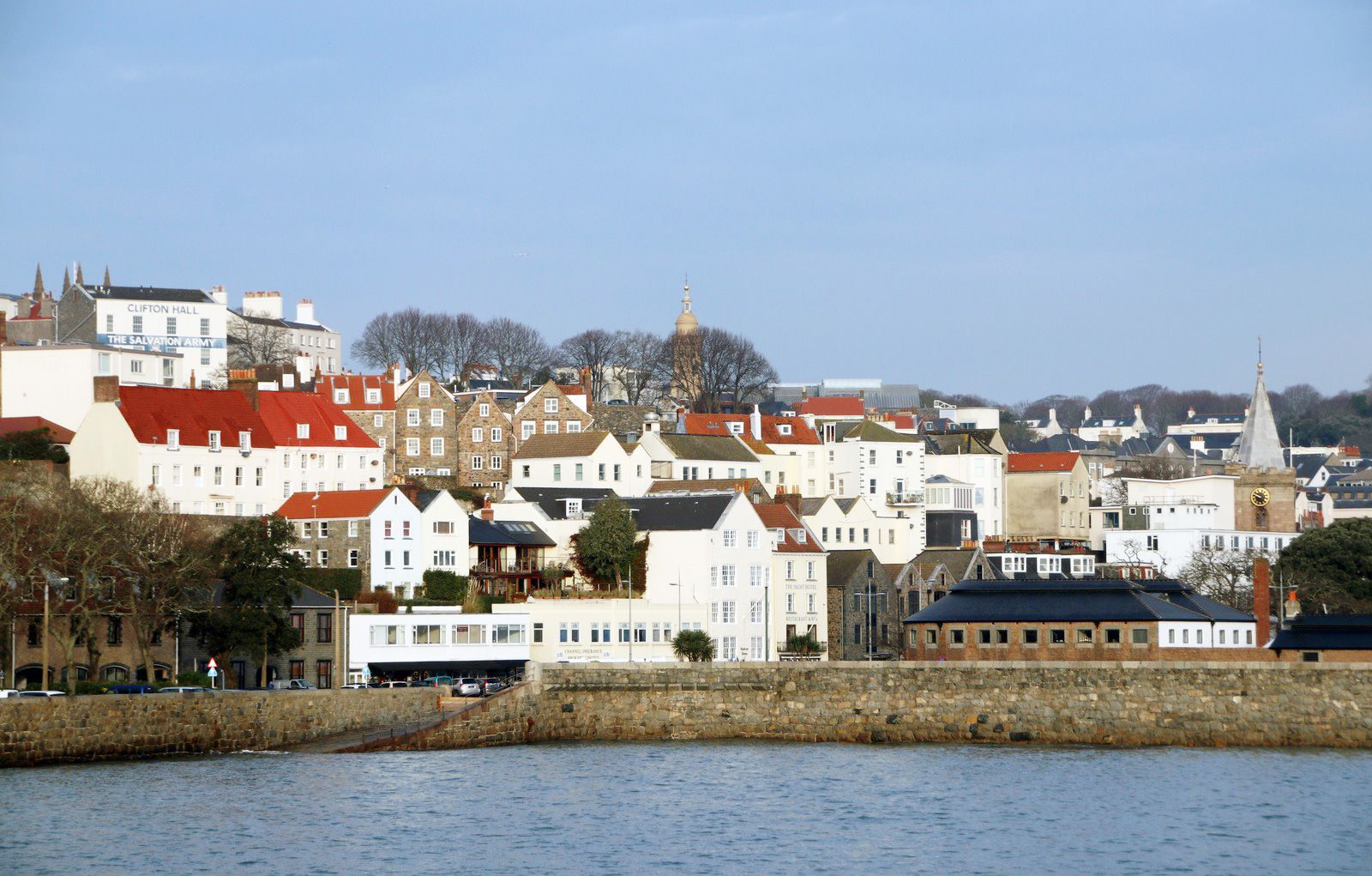
For an island of roughly 25 square miles, Guernsey is well served. The strongest signal sits where most people are: St Peter Port and its marina, St Sampson and the harbour to the north, the Vale, and the airport in Forest parish in the south. The west-coast bays around Cobo, Vazon and Pembroke hold up well, and the cliff-path walks along the rugged south coast toward Petit Bot and Moulin Huet generally keep a workable signal at the top of the path even if it dips in the coves below. Where things thin out is more about geography than network gaps — deep in the wooded valleys (the island's distinctive water lanes), inside the thick granite walls of older farmhouses and the harbour-front buildings, and on the boat crossings to the smaller islands. If you're day-tripping to Herm or Sark, expect patchy-to-no data on Sark in particular, which famously has no cars, no street lighting and very limited infrastructure — treat it as an offline day, download anything you need beforehand, and enjoy the disconnection. Coverage on the open sea between the islands is unreliable, so don't count on streaming during the crossing.
How much data you'll need
Guernsey travel is light on data, which makes plan choice easy. You're mostly using Google or Apple Maps to find your way along the narrow coast roads and rural lanes, WhatsApp and iMessage to stay in touch, a browser to check tide times before a beach walk and the local bus timetables, and your camera roll backing up over the day. There's no real ride-hailing scene — it's the local bus network, a handful of taxi firms and a lot of walking and cycling — so you won't be burning data on app-based transport the way you would in a big city. As a rough guide: a weekend break needs around 1-3 GB, a full week of normal sightseeing and messaging lands around 3-6 GB, and only heavy video streaming in the evenings or tethering a laptop for work pushes you toward a larger or unlimited-style allowance. The plans above cover each of those bands comfortably; pick the one that matches your trip rather than over-buying for data you won't touch.
Keep your number and WhatsApp
A modern phone runs your travel eSIM next to your usual SIM at the same time. Let the eSIM carry the data while your home number keeps handling calls, SMS and the bank or login one-time codes you don't want to miss. WhatsApp stays tied to your existing number regardless of which SIM moves the data, so nothing changes for the people messaging you. The one setting that matters: switch your home SIM's data roaming off so it can't quietly rack up charges in the background while the eSIM does the work.
Before you fly
First, confirm your handset supports eSIM — most iPhones from the XR onward, plus recent Samsung Galaxy, Google Pixel and several Honor and Motorola models. Our compatibility checker tells you in a few seconds. Install the eSIM while you're still on home Wi-Fi, before you travel; it sits dormant and activates once you arrive, whether you fly into Guernsey Airport (GCI) or come in by ferry from the mainland or Jersey. That means you walk out already connected, with no hunting for a kiosk.
Island-hopping the Channel Islands?
If Jersey or a stop on the mainland is also on your route, check whether a wider regional plan or a separate Jersey eSIM suits you better — the Channel Islands and the UK don't always share the same coverage footprint, so matching the plan to where you'll actually be saves money.