









Using mobile data in Ecuador: what to expect
Ecuador's mobile market runs on three operators — Claro, Movistar and the state-owned CNT — and between them they cover the populated mainland with 4G/LTE. In Quito, Guayaquil, Cuenca and the larger towns you'll get dependable data for maps, ride-hailing, mobile payments and messaging. 5G is at an early stage and concentrated in parts of the big cities, so the sensible plan is to count on solid 4G rather than assume next-generation speeds everywhere. A travel eSIM is the convenient route into all of it: it activates on arrival, spares you a local-SIM purchase with a passport and address, and gives you a flat local allowance instead of your home carrier's roaming rate — which adds up fast on the kind of longer, multi-stop trip Ecuador tends to be. You buy once, install before you go, and you're online before you've left the airport.
Coverage across Ecuador
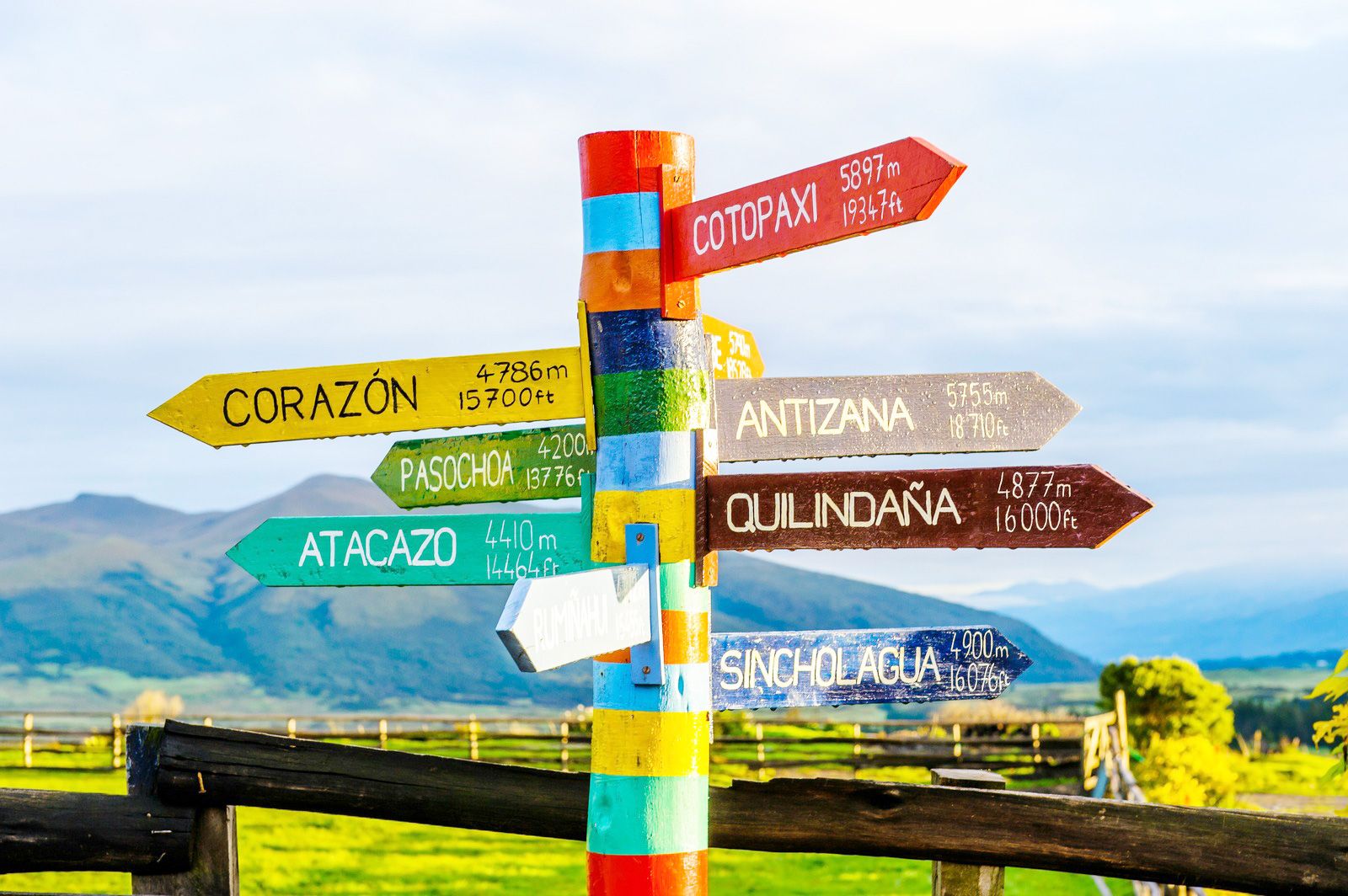
The Andean corridor and the coast are well covered — Quito and the highland valleys, Guayaquil and the Santa Elena beach resorts, Cuenca with its colonial centre, plus Ambato, Riobamba and the towns strung along the Pan-American Highway. Where signal genuinely thins is the geography Ecuador is most famous for. The high páramo grasslands and the volcano routes around Cotopaxi and Chimborazo drop out quickly; the cloud-forest reserves near Mindo are patchy; and above all the Oriente — the Amazon basin around Yasuní and the jungle lodges — should be treated as little-to-no signal, by design and by terrain. The Galápagos Islands are a special case worth flagging: some coverage exists in the main towns on Santa Cruz and San Cristóbal, but it is limited and slow, and it disappears entirely on inter-island boats and remote landings. Do not expect anything like a normal mainland data experience out on the islands. The takeaway across all of these: download offline maps and any reading or booking details before you head into the jungle, up the volcanoes, or out to Galápagos.
How much data you'll need
Mainland Ecuador is data-moderate. You'll use Google Maps to get around, the ride apps that work locally — Uber, Cabify and inDrive in the cities — WhatsApp for nearly everything from booking tours to texting your taxi driver (it's the default channel here), a Spanish translation app, and the usual social. A week split between Quito, the Avenue of the Volcanoes and a beach or cloud-forest stop is comfortable on roughly 8-15 GB. Here's the counterintuitive part: if a chunk of your trip is in the Galápagos or the Amazon, you'll actually consume less data on those legs simply because there's little signal to use — so don't overbuy on their account. The plans above show the options, topping up is simple, and a sensible middle allowance plus a top-up if needed beats committing to the largest plan up front.
Keep your number and WhatsApp
You don't have to give up your home number. A dual-SIM phone runs the eSIM beside your normal SIM: the eSIM carries data while your usual number keeps calls, SMS and bank one-time codes, and WhatsApp stays on your existing number — which matters a great deal in Ecuador, where WhatsApp is how you'll reach drivers, guides, hostels and tour operators. Switch your home SIM's data roaming off so it can't quietly run up charges while the eSIM does the work, and you keep your normal number reachable without paying international data rates.
Before you fly
Check your phone supports eSIM — most iPhones from the XR onward, plus recent Samsung, Pixel and other current models — with our compatibility checker. Install on home Wi-Fi a day or two before departure; the plan stays dormant until you first connect inside Ecuador. It activates as you land at Quito's Mariscal Sucre (UIO) or Guayaquil's José Joaquín de Olmedo (GYE), so you can order a ride or message your lodge straight off the plane instead of hunting for airport Wi-Fi at altitude.
One leg of a wider South America trip?
If Ecuador is part of a longer route — pairing with neighbouring Peru or Colombia, for instance — note that a country plan won't cross borders with you; each country is its own coverage zone, so you'd want a separate eSIM for each. For an Ecuador-focused trip, the local plan is the simplest and cheapest way to stay connected from the moment you arrive.