







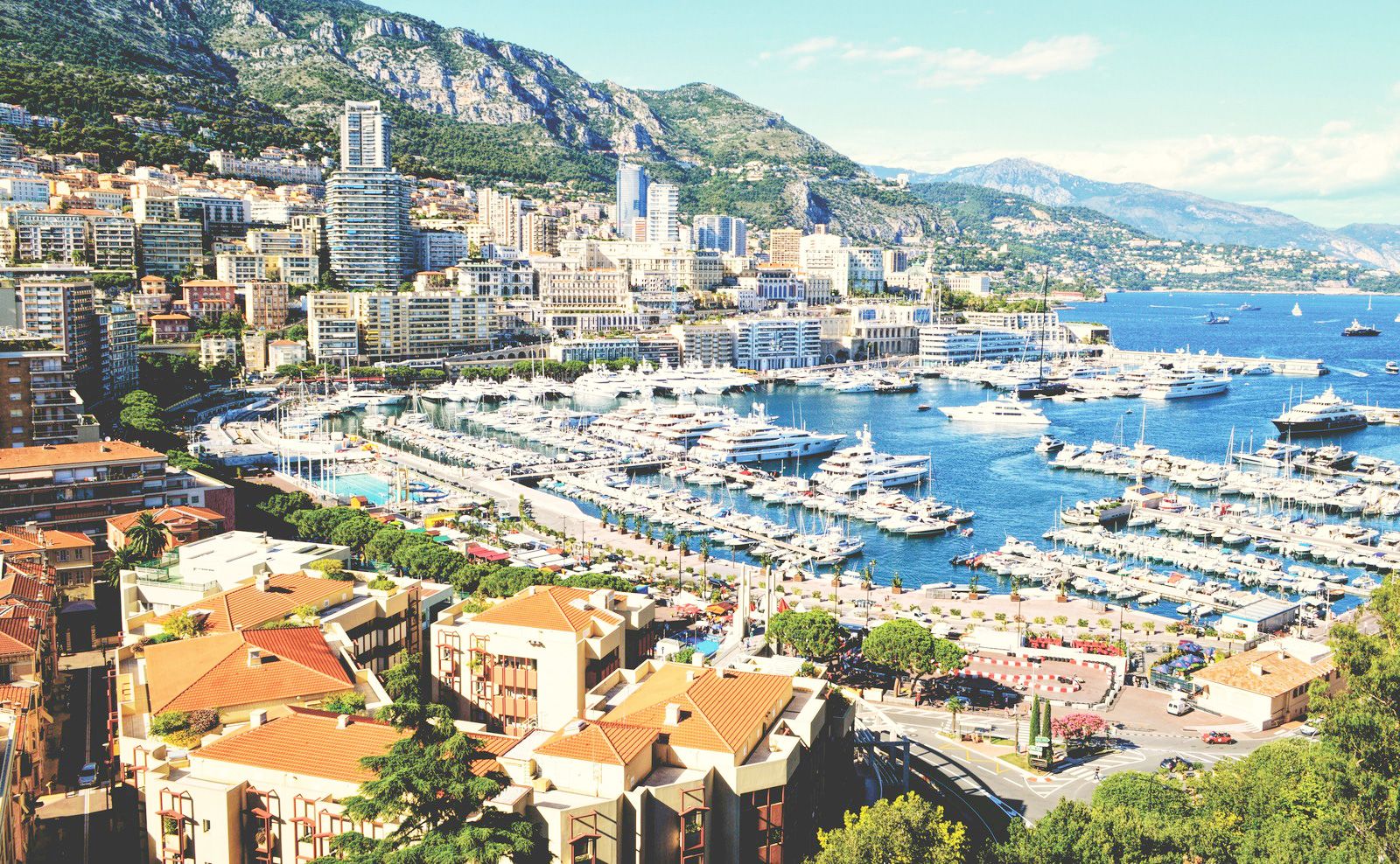


Using mobile data in Monaco: what to expect
Monaco is one of the most network-saturated patches of land on earth. The principality is barely two square kilometres, and the operators that serve it — Monaco Telecom locally, with French carriers reaching across the border — push strong 4G into every street, with 5G live across Monte Carlo and the harbour district. Because the country is so compact and built up, there is essentially no part of it without fast, usable data: maps, messaging, translation, ride apps and photo uploads all behave the way they would in a major French city. A travel eSIM fits Monaco perfectly because most visitors arrive from neighbouring France or Italy, move around quickly, and never want to hunt for a SIM kiosk in a place where everything costs a premium.
Coverage across Monaco
Coverage is uniform in a way few destinations can match. Monte Carlo around the Casino and the Hôtel de Paris, La Condamine and the port, the Larvotto beach area and the Fontvieille marina all carry full-strength signal. The terraced streets climbing up toward Exotic Garden and the Rock (Monaco-Ville, where the Palace and Oceanographic Museum sit) hold up well despite the steep terrain. The only places you might see a brief dip are inside the deeper road tunnels that thread under the principality and in lower parking levels — and even those are short. Step out onto the Grand Prix circuit roads and you are back on full bars instantly.
How much data you'll need
Monaco is a short-stay destination, so data needs are modest. Most people use Google or Apple Maps to navigate the tight, layered streets, WhatsApp and Instagram to share photos from the harbour, Google Translate for French menus, and the odd rideshare or taxi-booking app. A day trip or single overnight rarely tops 1-2 GB. A long weekend taking in the Casino, the Oceanographic Museum and the coastal walk to Cap d'Ail sits comfortably around 3-5 GB. If you are basing yourself here for a week and streaming in the evenings, look at one of the larger or unlimited-style options in the plans above. Because Monaco is so often combined with Nice, Cannes and the wider Riviera, many travellers prefer a plan that also covers France on the same eSIM.
Keep your number and WhatsApp
A modern phone runs your travel eSIM alongside your usual SIM, so you do not lose your identity while abroad. The eSIM handles all the data; your home number stays active for calls, SMS and the one-time codes your bank sends; and WhatsApp keeps working on your existing number with no reconfiguration. The one setting to change is data roaming on your home SIM — switch it off so it cannot quietly rack up charges in the background while the eSIM does the work.
Before you fly
First confirm your handset supports eSIM. Most iPhones from the XR onward, plus recent Samsung Galaxy, Google Pixel and Honor models, are compatible; our compatibility checker tells you in a few seconds. Install the eSIM over home Wi-Fi before you travel — the profile downloads while you are still online and stays dormant until you arrive. Monaco has no commercial airport of its own: most visitors land at Nice Côte d'Azur (NCE) about 30 minutes away and reach the principality by helicopter, train or car, while some arrive via the rail line at Monaco-Monte Carlo station. Your plan activates the moment you connect to a local network on the way in.
One stop on a Riviera trip?
Monaco is rarely visited alone — it usually sits on a route through the French and Italian Riviera. A regional Europe plan keeps you connected across the border into France and onward to Italy on a single eSIM, with no new SIM needed each time you cross.