








Using mobile data in Liechtenstein: what to expect
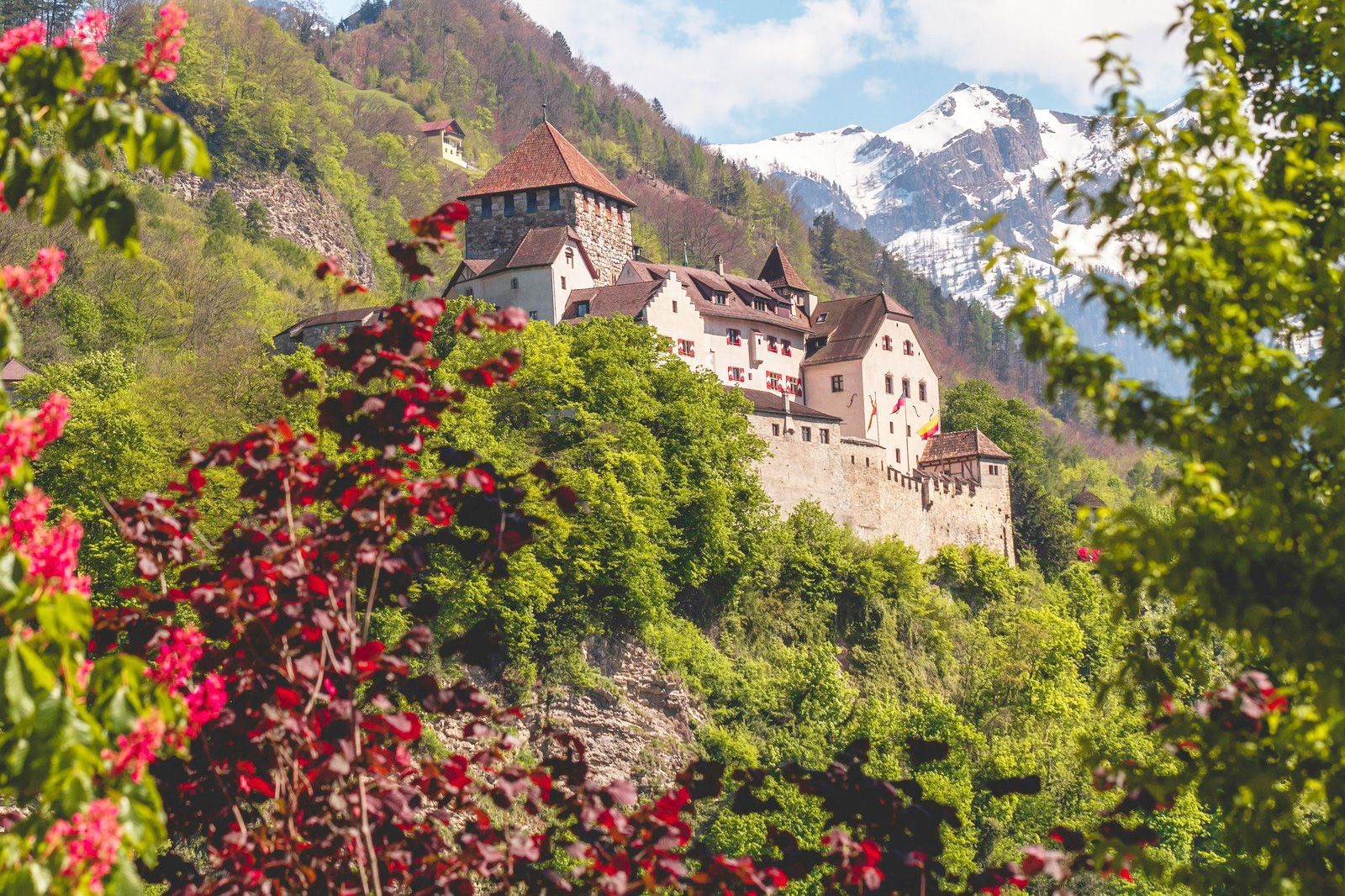
Liechtenstein is one of Europe's smallest countries — a sliver of Alpine valley wedged between Switzerland and Austria — and its mobile coverage reflects how compact and developed it is. The networks here operate in close coordination with neighbouring Swiss infrastructure, so 4G is comprehensive across the inhabited valley floor and data is fast and reliable for everything a visitor needs: maps, messaging, translation, mobile payments and uploading photos from Vaduz Castle or a mountain trail. A travel eSIM is the simplest way to stay connected on what is usually a short visit. It activates the moment you arrive, runs on a local network, and avoids the surprise roaming charges that can stack up fast in this corner of the Alps — where, because the borders are so close together, your phone may quietly hop between Liechtenstein, Swiss and Austrian signals without you noticing. An eSIM that's set up before you arrive sidesteps all of that.
Coverage across Liechtenstein
Because the whole country is barely 25 km long and 12 km wide, coverage is refreshingly straightforward. The valley floor — Vaduz, Schaan, Balzers, Triesen, Eschen and the other Rhine-valley municipalities — has strong, consistent signal, as does the main road running the length of the country and the cycle paths along the Rhine. Where it predictably weakens is up in the mountains. The higher village of Triesenberg, and especially the alpine resort bowl of Malbun with its small ski area and the hiking trails climbing toward the Rätikon and the Three Sisters peaks, can drop to patchy service in the folds of the terrain. The Fürstensteig ridge trail, a popular but exposed hike, is one to download offline before you set out. If you're heading up to Malbun to hike or ski, sort your trail maps and any reservations on the valley floor first. For everyday sightseeing around Vaduz, you'll rarely encounter a gap.
How much data you'll need
A Liechtenstein visit is usually short — many travellers come for a day or two as part of a Switzerland-and-Austria trip, or simply to collect the famous passport stamp — and it's light on data. You'll mostly use Google Maps, WhatsApp, a translation app for German, mobile payments and photo uploads. As a rough guide: a day trip or a couple of nights sits comfortably on a small plan; if Liechtenstein is part of a longer regional loop, which it almost always is, it makes far more sense to size your data for the whole route than for this single short stop. Heavy streaming or remote work points to a larger allowance. The live options are in the plans above — pick a small-to-mid plan if Liechtenstein is the main destination, and top up if you need more.
Keep your number and WhatsApp
You don't have to drop your home number. A dual-SIM phone runs the eSIM next to your normal SIM, so the eSIM carries data while your usual number keeps handling calls, texts and bank verification codes. WhatsApp stays on your existing number with nothing to re-verify. Just turn data roaming off on the home SIM — and this matters more in Liechtenstein than almost anywhere, because your phone can latch onto a Swiss or Austrian tower across the border from a single spot in the valley and trigger roaming charges if the home SIM is left roaming-enabled.
Before you fly
Confirm your phone supports eSIM — most iPhones from the XR onward, plus recent Samsung, Pixel and Honor models. Our compatibility checker checks in seconds. Liechtenstein has no commercial airport of its own, so almost everyone arrives overland — typically from Zurich Airport (ZRH) in Switzerland, by train to Sargans or Buchs and then bus, or by road from Austria. Install the eSIM on Wi-Fi before you set off and it activates when you first connect on arrival in the valley. Because Liechtenstein is nearly always one piece of a wider Alpine trip, a Europe regional plan often makes more sense than a single-country plan — it keeps you online across Switzerland, Austria and Liechtenstein on one eSIM, with no need to re-buy at each border.