








Using mobile data in Kyrgyzstan: what to expect
Kyrgyzstan is more connected than its remote, mountainous reputation suggests — at least where people live. The main operators, Beeline, MegaCom and O! (Nur Telecom), provide solid 4G across the cities and larger towns, with service spreading along the main valleys and roads. For the typical trip — navigating Bishkek, arranging a marshrutka or a driver, translating Cyrillic signage, messaging a yurt-camp host — data is reliable in the urban centres and usable along the busier routes. But this is a country where most of the appeal lies in the high mountains, and that's exactly where coverage thins out, so it pays to plan around it. A travel eSIM suits Kyrgyzstan well: it gets you online the instant you land instead of dealing with a SIM kiosk and registration paperwork after a long flight, and it avoids the heavy roaming rates a home carrier charges in Central Asia. Treat data as a town-and-valley resource and download what you need before heading up.
Coverage across Kyrgyzstan
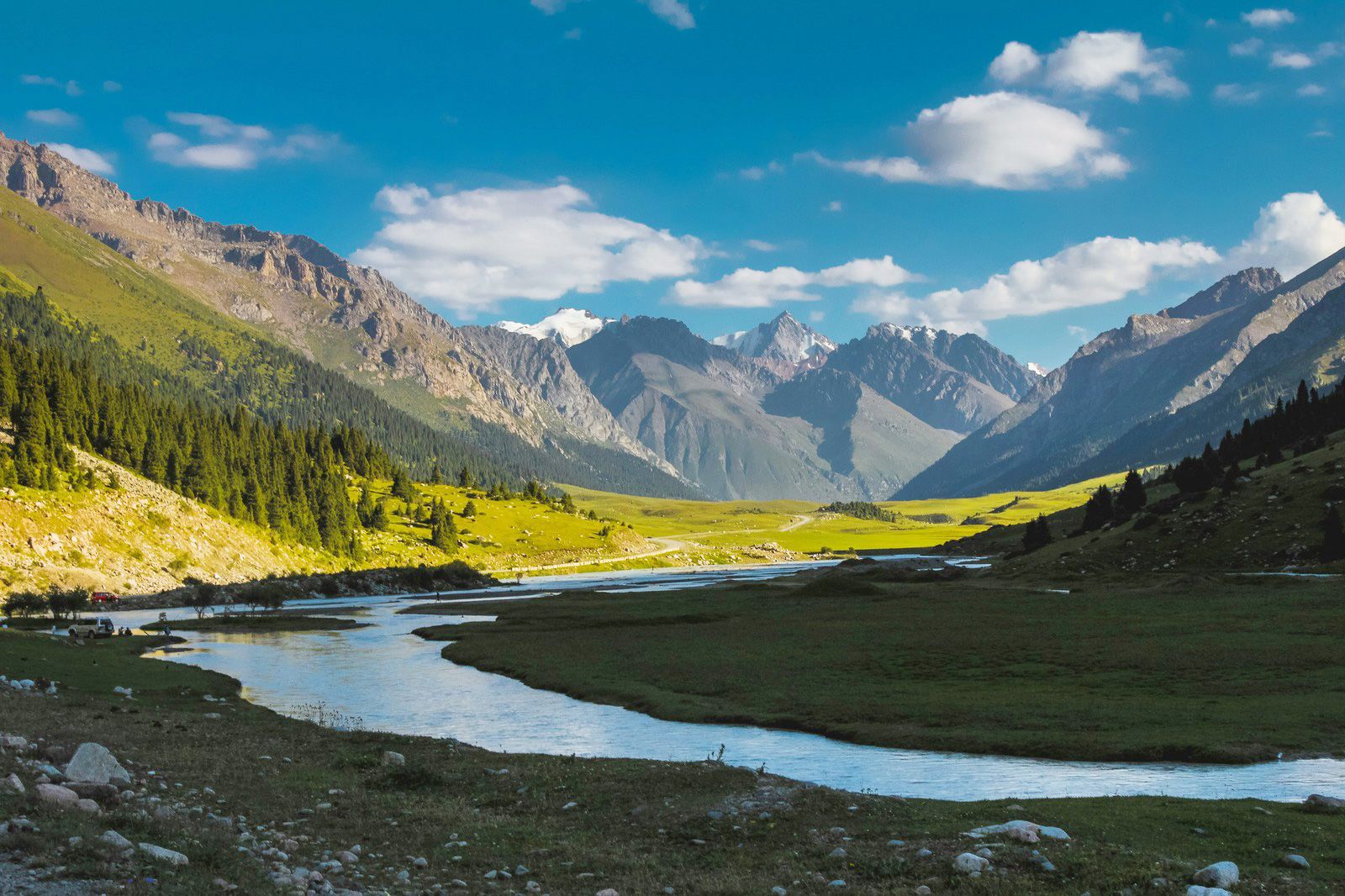
The strongest coverage follows the population, which clusters in the north and the Fergana valley fringe in the south. Bishkek, the capital, has the most reliable, fast service across its districts, and Osh in the south is the other solid hub. Towns like Karakol in the east, Naryn, Jalal-Abad and Cholpon-Ata along the shores of Lake Issyk-Kul generally have usable signal, and the lake's northern resort strip is reasonably covered. Where it falls away, honestly: the high mountain regions that draw most visitors — the alpine lakes of Song-Kol and Sary-Chelek, the trekking valleys around Ala-Kul and Jyrgalan, the remote Tien Shan and Pamir-Alay ranges, and the spectacular but isolated road south over the Kara-Keche and Torugart passes toward China. Up at the summer jailoo (mountain pastures) where the yurt stays and horse treks happen, expect little to no signal. Download offline maps (Maps.me or Google Maps offline areas) for every trek and mountain drive before you leave town.
How much data you'll need
Kyrgyzstan travel is fairly data-light, with usage concentrated in the cities at the start and end of a trip. You'll rely on Google Maps and Maps.me for navigation, WhatsApp and Telegram to coordinate with guides, drivers and community-based tourism hosts, Yandex for maps and rides in Bishkek, and a translation app for Kyrgyz and Russian. A rough guide: a few days in and around Bishkek runs about 3-5 GB; a one-to-two-week loop taking in Issyk-Kul, Karakol and a few mountain excursions lands near 8-15 GB, much of it used in town between trips since the mountains are largely offline; if you'll tether a laptop or back up trekking photos and drone footage from the cities, look at a larger option in the plans above. The biggest data days are the urban ones — upload and sync then, not on the jailoo.
Keep your number and WhatsApp
A modern dual-SIM phone runs your travel eSIM alongside your usual SIM, so you keep both. The eSIM carries all your data while your home number stays live for calls, SMS and the bank one-time codes you'll want when paying for tours, permits or domestic flights. WhatsApp and Telegram — the two apps guides and hosts actually use here — keep working on your existing number with nothing to reconfigure. Just switch your home SIM's data roaming off before you arrive so it can't quietly trigger expensive Central Asian roaming charges while the eSIM does the work.
Before you fly
First, confirm your phone supports eSIM — most iPhones from the XR onward, plus recent Samsung Galaxy, Google Pixel and Honor models. Our compatibility checker shows you in seconds. Install the eSIM over home Wi-Fi before departure; it stays dormant until you arrive and activates automatically when you land at Manas International near Bishkek (FRU) or Osh Airport in the south (OSS).
Good to know, and a tip
Kyrgyzstan is a hub of Central Asian overland travel — many visitors combine it with Kazakhstan, Uzbekistan or Tajikistan on a single trip, and the dramatic Pamir Highway and Silk Road routes cross several borders. If that's your plan, an Asia regional eSIM can keep you online across multiple countries on one plan rather than buying a new SIM at each frontier. Practical tip: cash is king outside Bishkek and card terminals are scarce in the mountains, so download your maps, route notes and any booking confirmations while you're still on solid city data — you may not get another chance for days.