








Mobile data in Kazakhstan: what to expect
Kazakhstan is the world's largest landlocked country, and its mobile network mirrors that scale — excellent where the cities are, sparse across the vast steppe and desert between them. The main operators, Kcell, Beeline Kazakhstan and Tele2/Altel, deliver strong, fast 4G across the urban centres, with 5G now live in Almaty and Astana. For travellers, that means quick data for Yandex Maps and 2GIS (the navigation apps locals actually use), Yandex Go for taxis, Telegram and WhatsApp for messaging, and a translation app since Kazakh and Russian dominate and English is limited outside hotels. A travel eSIM is the practical choice: it activates on arrival, sidesteps the high roaming rates a home carrier charges in Central Asia, and saves you the local-SIM registration paperwork.
Coverage across the country
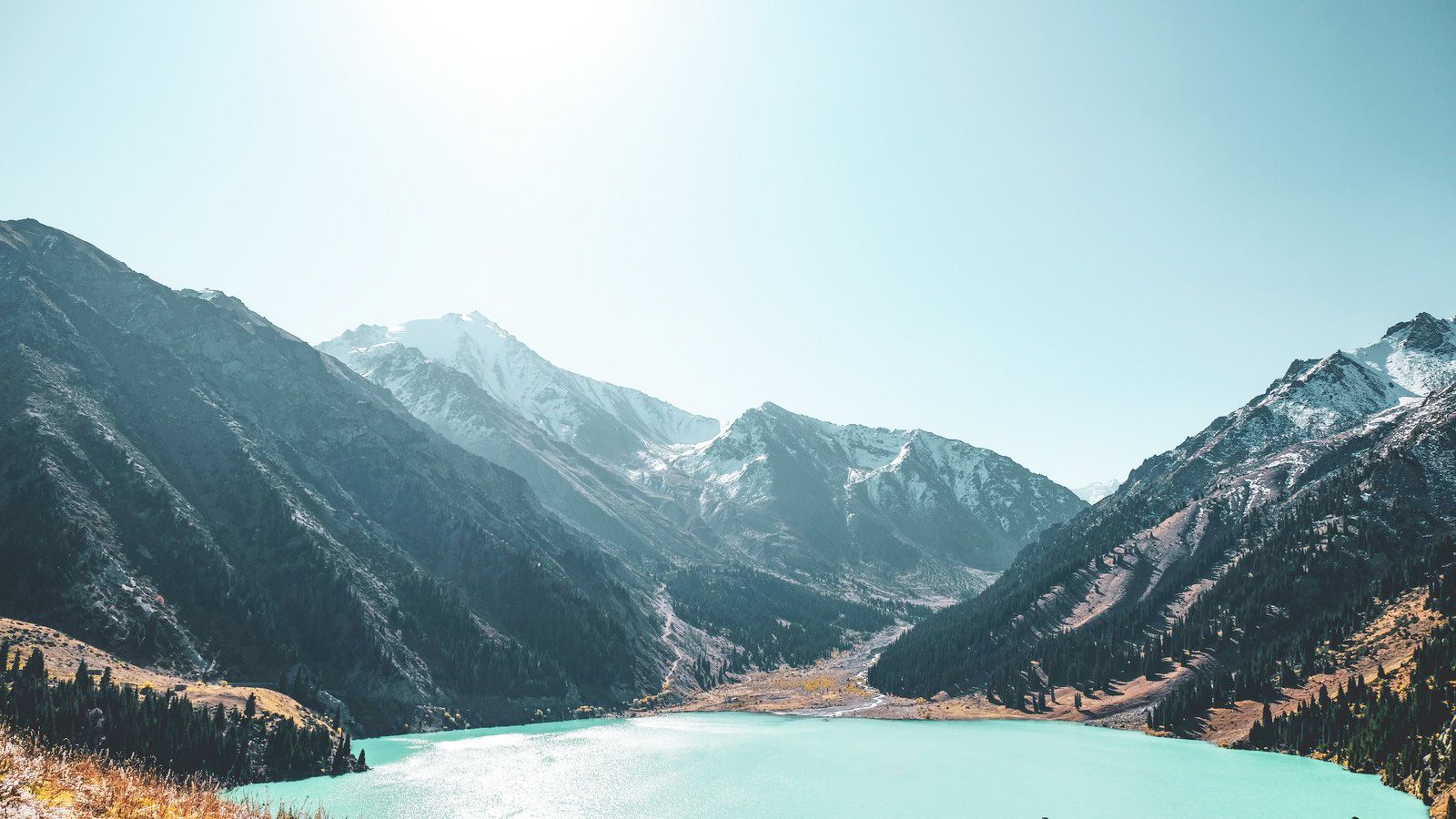
Expect dependable 4G in Almaty (the largest city), the capital Astana, and the southern hubs of Shymkent and Turkistan. Regional centres such as Karaganda, Aktobe, Atyrau and Aktau on the Caspian, Oskemen (Ust-Kamenogorsk) in the east, and Taraz and Kyzylorda along the south all have solid signal. The main intercity roads and the railway corridors keep you connected near towns. Where it genuinely falls away: the open steppe between cities, the Betpak-Dala desert, the Mangystau region's remote canyon country around Bozzhyra and the Aktau-to-desert tracks, and the mountain valleys of the Tian Shan beyond Almaty — Big Almaty Lake, the Charyn Canyon approach and the Kolsai Lakes can drop to weak or no coverage. Distances here are immense, so on any long drive plan for stretches offline and download offline maps in advance.
How much data you'll need
City-based travel in Kazakhstan can be moderately data-heavy because the local apps are full-featured: 2GIS and Yandex Maps for navigation, Yandex Go for taxis, Telegram for everything social, plus translation that often runs live. A long weekend in Almaty or Astana sits around the low-to-mid single-digit GB. A one-to-two-week trip taking in several cities, with regular navigation, messaging and some streaming in the evenings, runs roughly 8-20 GB. A road trip out to Mangystau or the Tian Shan lakes leans more on offline maps and less on live data, simply because coverage is patchy out there. The plans above span light city stays through to heavier multi-week itineraries — size to how much you stream and how far off the main routes you go.
Keep your number and WhatsApp
On a dual-SIM phone the eSIM carries your data while your home SIM stays live for calls, SMS and bank verification codes. WhatsApp and Telegram both stay tied to your existing number, so nothing changes for your contacts. The key step is turning your home SIM's data roaming off — Central Asian roaming is exactly the kind of bill an eSIM is meant to replace, so don't let the home line slip onto it in the background while the eSIM does the work.
Before you fly
Check your phone supports eSIM first — most iPhones from the XR onward, plus recent Samsung Galaxy, Pixel and other flagships; our compatibility checker confirms it in seconds. Install on home Wi-Fi before departure so the eSIM is ready to activate when you land — at Almaty International (ALA) or Astana's Nursultan Nazarbayev International (NQZ), the two main gateways. Setting it up beforehand means you can order a Yandex Go straight from the terminal. If Kazakhstan is one leg of a wider Silk Road route, a regional Asia plan can keep one eSIM live across several neighbouring countries.
Good to know: local apps and addresses
Three practical habits make a real difference here. First, download 2GIS before you arrive — it works partially offline, has the most accurate local business listings, and is far better than Google Maps for Kazakh addresses, building entrances and apartment-block numbering, which can be genuinely confusing otherwise. Second, Yandex Go is the default for taxis and is much cheaper and safer than flagging cars on the street, but it needs live data to book and track the ride, so keep some headroom for it. Third, the country spans a huge east-west distance and two time zones, and intercity travel is often by overnight train or long-haul bus where coverage comes and goes — download your tickets, maps and any reading before you board rather than counting on signal en route. A useful tip: keep a little data set aside for the airport and your first taxi, since that first ride is when you most need to be online and least want to be hunting for Wi-Fi; both Almaty and Astana airports have official taxi desks if your data isn't live yet.