








Using mobile data in Grenada: what to expect
Grenada runs on two main networks — Flow and Digicel — and between them they put solid 4G/LTE across the populated parts of the Spice Isle. Around St. George's, the Grand Anse beach strip, the cruise terminal and the south-coast hotels you'll get dependable data for maps, messaging, mobile banking and uploading photos. 5G is only just appearing across the eastern Caribbean and isn't something to count on here, but 4G is more than enough for everything a traveller actually does on the move. The honest reason a travel eSIM makes sense on an island like this is cost: home-carrier roaming day-rates stack up alarmingly fast over a week, and the airport SIM kiosk means a passport, a queue and a top-up dance. An eSIM gives you a flat local allowance, activates by itself when you arrive, and never touches your home bill.
Coverage across Grenada
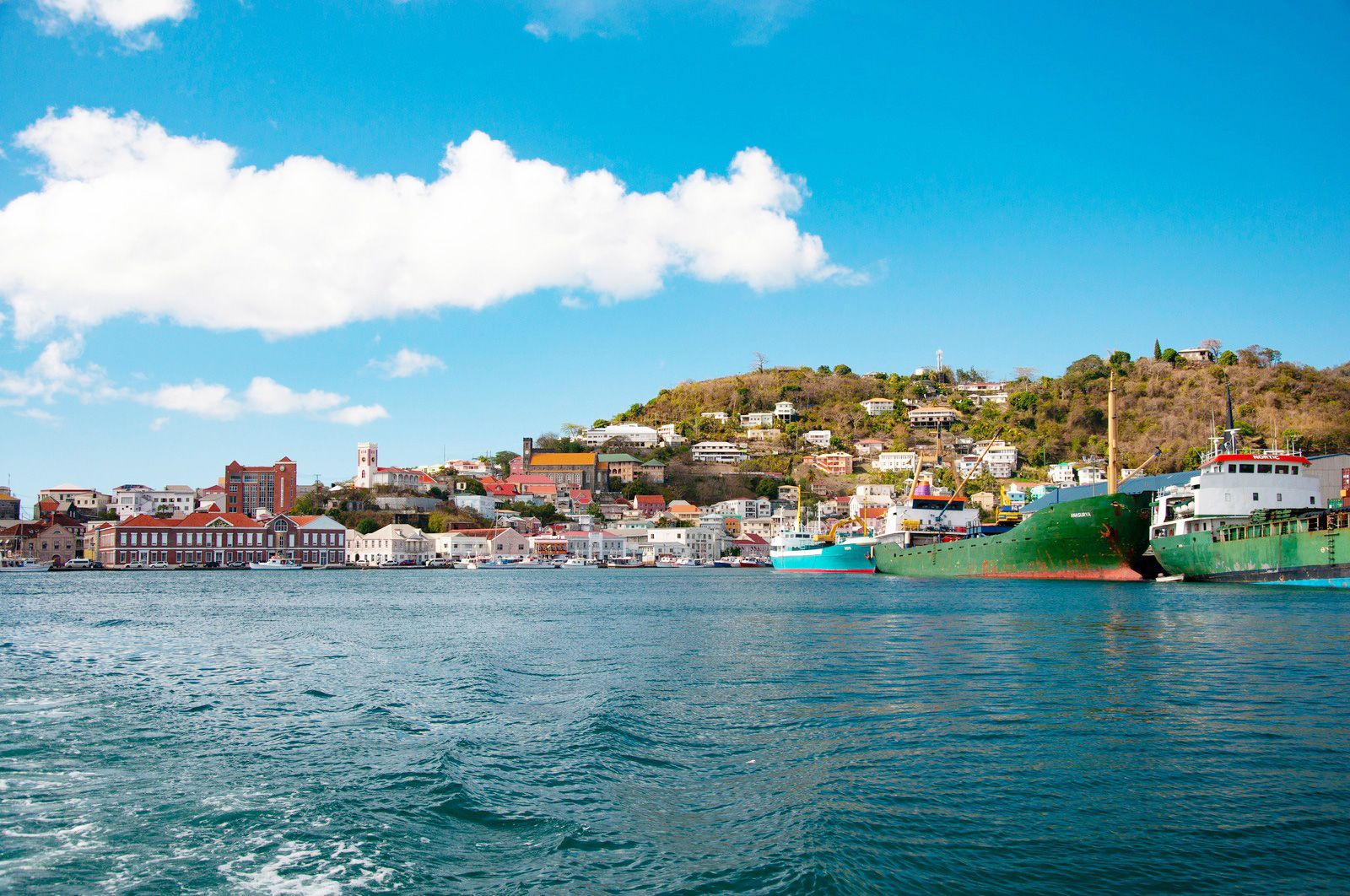
The mainland's south and west carry the strongest signal — St. George's, the Grand Anse and Morne Rouge beaches, Lance aux Épines, True Blue and the area around the airport — which is conveniently where most visitors actually stay. The St. David's and Grenville areas on the east coast are well served too, and the main coastal ring road generally holds reception. Things get patchier the moment you climb inland: the Grand Etang rainforest reserve, the mountain roads up to Annandale and Concord Falls, the spice plantations around Gouyave, and the higher interior villages can drop to crawling data or nothing at all. On the sister islands, Carriacou has usable coverage around Hillsborough and the main settlements, while tiny Petite Martinique, the offshore reefs and remote yacht anchorages are genuinely hit-or-miss. The rule of thumb: cache offline maps before you sail to the sister islands or head up into the hills, because the interior roads are exactly where you don't want to be guessing at a junction.
How much data you'll need
Grenada travel is fairly light on data, partly because so much of the trip happens at a beach or on a boat. You'll mostly lean on Google Maps for the winding, often unsigned roads, WhatsApp to coordinate with villa hosts, taxi drivers and dive operators — it's the default way businesses here communicate — Instagram for the beaches and the Underwater Sculpture Park, plus the odd weather or tide check before a day out. As a rough guide: a long weekend based at Grand Anse is comfortable on around 3-5 GB. A one-to-two-week trip mixing beaches, rainforest hikes, a chocolate-estate tour and a Carriacou day-sail lands around 8-15 GB. If you intend to video-call home regularly or stream in the evenings, size up. The plans above show the live options, and because topping up mid-trip is straightforward, there's no reason to over-buy on day one — start mid-range if you're unsure and add more if you burn through it.
Keep your number and WhatsApp
You don't have to give up your usual number to get Grenadian data. A modern phone runs the eSIM alongside your normal SIM (dual-SIM): the eSIM handles all your data while your home line keeps calls, SMS and bank one-time codes flowing, and WhatsApp stays tied to your existing number, so contacts reach you exactly as before. The one setting that matters is switching your home SIM's data roaming off, so it can't quietly latch onto a local network in the background and run up charges while the eSIM is doing the real work. That single toggle is the difference between a flat-price trip and a surprise bill.
Before you fly
First, make sure your handset is eSIM-capable — that's most iPhones from the XR onward, plus recent Samsung Galaxy, Google Pixel and other current Android models; our compatibility checker confirms it in a few seconds so there are no surprises at the airport. Buy and install the eSIM while you're still on home Wi-Fi, ideally a day or two before you travel; it stays dormant and only starts counting down once you first connect on the island. It activates as you land at Maurice Bishop International Airport (GND) near Point Salines, so you can message your transfer driver or pull up directions before you've even cleared the arrivals hall.
Island-hopping the eastern Caribbean?
If Grenada is just one stop on a wider sailing or island route, remember a single country plan won't follow you across borders — each island is its own coverage zone. For a multi-island trip you'll want a separate eSIM per country, or to check whether a neighbouring hub like Barbados or Trinidad and Tobago fits the rest of your itinerary. For a Grenada-only holiday, though, the local plan is the simplest and cheapest way to stay connected from touchdown to departure.