









Using mobile data in Greece: what to expect
Greece is well wired for travellers. The three carriers — Cosmote, Vodafone Greece and Nova — cover the mainland and the populated islands with solid 4G, and 5G is now live across Athens, Thessaloniki, Patras, Heraklion and a growing list of tourist centres. For the things you'll actually do — pulling up ferry schedules, mapping a route through the Plaka, translating a taverna menu, booking a Beat or FreeNow ride in the capital — data is quick and dependable in every city and resort. A travel eSIM matters here because so much of a Greek trip happens in transit: island-hopping by ferry, driving the Peloponnese, hopping a domestic flight to the Cyclades. With an eSIM you're online the moment you land, with no roaming bill waiting at home and no airport-kiosk queue eating into your first afternoon. And because Greece is in the EU, the same plan logic that keeps you connected here extends naturally if your trip spills over a border.
Coverage across Greece
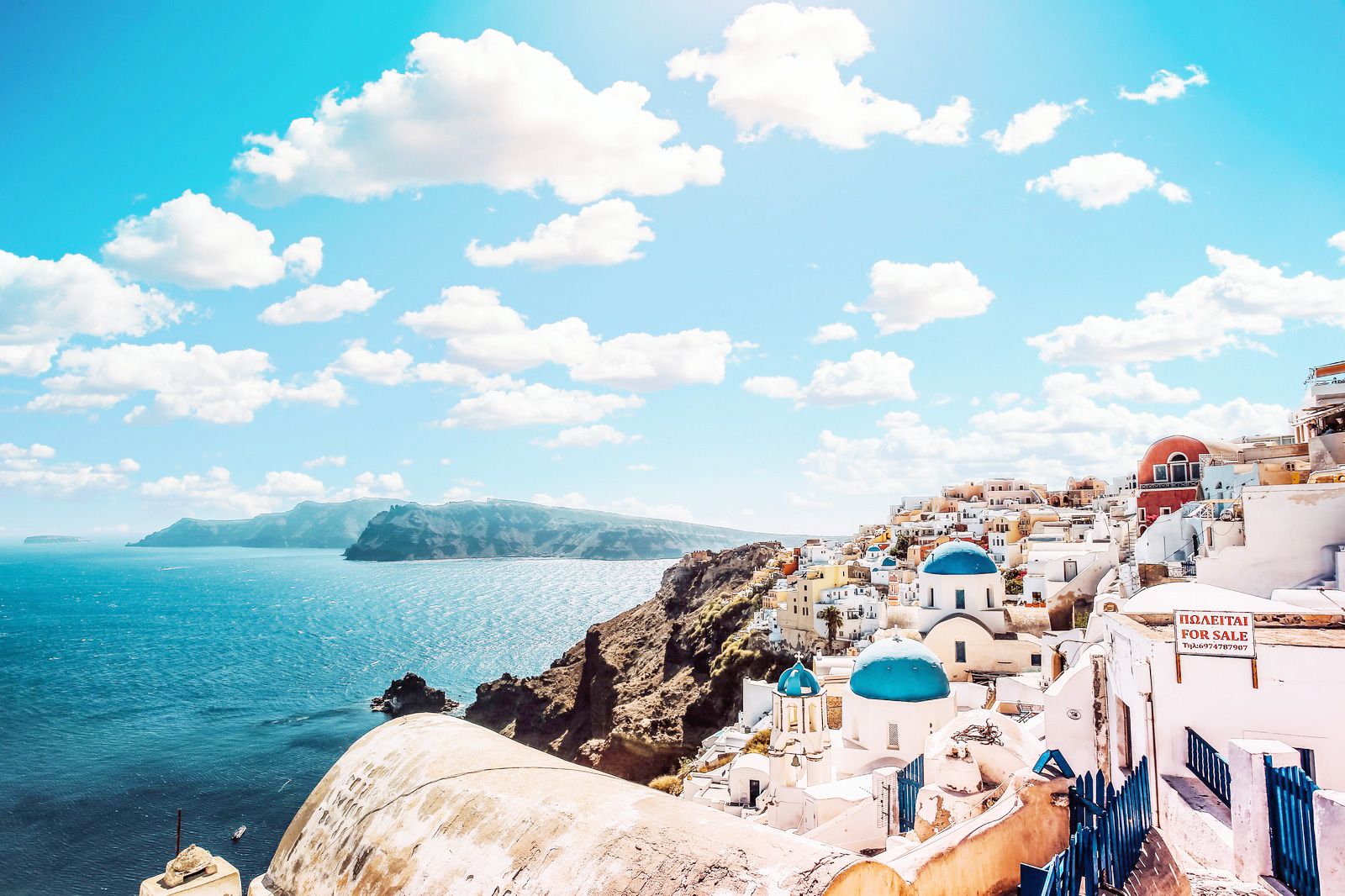
The mainland is the strong core. Athens and the wider Attica region, Thessaloniki and the northern cities all have reliable, fast service, as do the big inland draws of Delphi, Meteora, Nafplio and Olympia. Among the islands, the well-developed ones — Crete (Heraklion, Chania, Rethymno), Rhodes, Corfu, Mykonos, Santorini, Paros and Naxos — have good coverage in their towns and main beaches. The honest caveats: signal weakens on the smaller Cyclades and Dodecanese, on the remoter Ionian and Sporades islands, in mountainous interiors like the Pindus range, the Mani peninsula and parts of central Crete, and — predictably — out on open water. On a ferry between islands, expect data to drop in and out once you're well offshore, sometimes for an hour or more on the longer crossings, so download your maps, tickets and any reading before you board. Mountain hiking on Crete's Samaria Gorge or around Mount Olympus will also take you out of coverage in stretches, and the same goes for the remote north of Zagori and the trails of Mount Pelion.
How much data you'll need
Greek travel is fairly data-light. You'll lean on Google Maps for the maze of island lanes and mainland drives, WhatsApp to coordinate with hosts and tour operators, Google Translate's camera for menus and signage, a ferry app like Ferryhopper to track sailings, and a ride app such as Beat or FreeNow in Athens. As a rough guide: a long weekend in Athens runs around 3-5 GB; one to two weeks combining the capital with a couple of islands lands near 10-20 GB; a longer island-hopping summer with lots of photo and video uploads can push past that, so if you plan to stream or tether a laptop, look at one of the larger or unlimited-style options in the plans above. Heavy uploads from the Santorini caldera at sunset, or live video calls home from a beach, are the single biggest thing that drives usage up, while a few days of maps, messaging and menu translation barely register.
Keep your number and WhatsApp
A modern phone runs your travel eSIM alongside your usual SIM, so you don't have to choose. The eSIM handles all your data while your home number stays active for calls, SMS and — importantly — the one-time codes your bank texts you when you book a hotel or a catamaran day trip. WhatsApp keeps working on your existing number with no changes. The one setting to get right: switch your home SIM's data roaming off so it can't quietly rack up charges in the background while the eSIM does the work.
Before you fly
First, confirm your handset supports eSIM — most iPhones from the XR on, plus recent Samsung Galaxy, Google Pixel and Honor models. Our compatibility checker tells you in a few seconds. Install the eSIM over home Wi-Fi before you leave; it stays dormant until you arrive and connects automatically when you land at Athens (ATH), Thessaloniki (SKG), Heraklion (HER), Rhodes (RHO) or Corfu (CFU).
Greece as part of a longer European trip?
Because Greece sits inside EU roaming, a single Europe-wide eSIM keeps you connected across borders if your route also takes in Italy, Bulgaria, Albania or beyond — one plan, no swapping, no surprises at each frontier. Practical tip: many island ports have free Wi-Fi at the cafés around the harbour, handy for a last big download before a long ferry leg knocks you offline.