







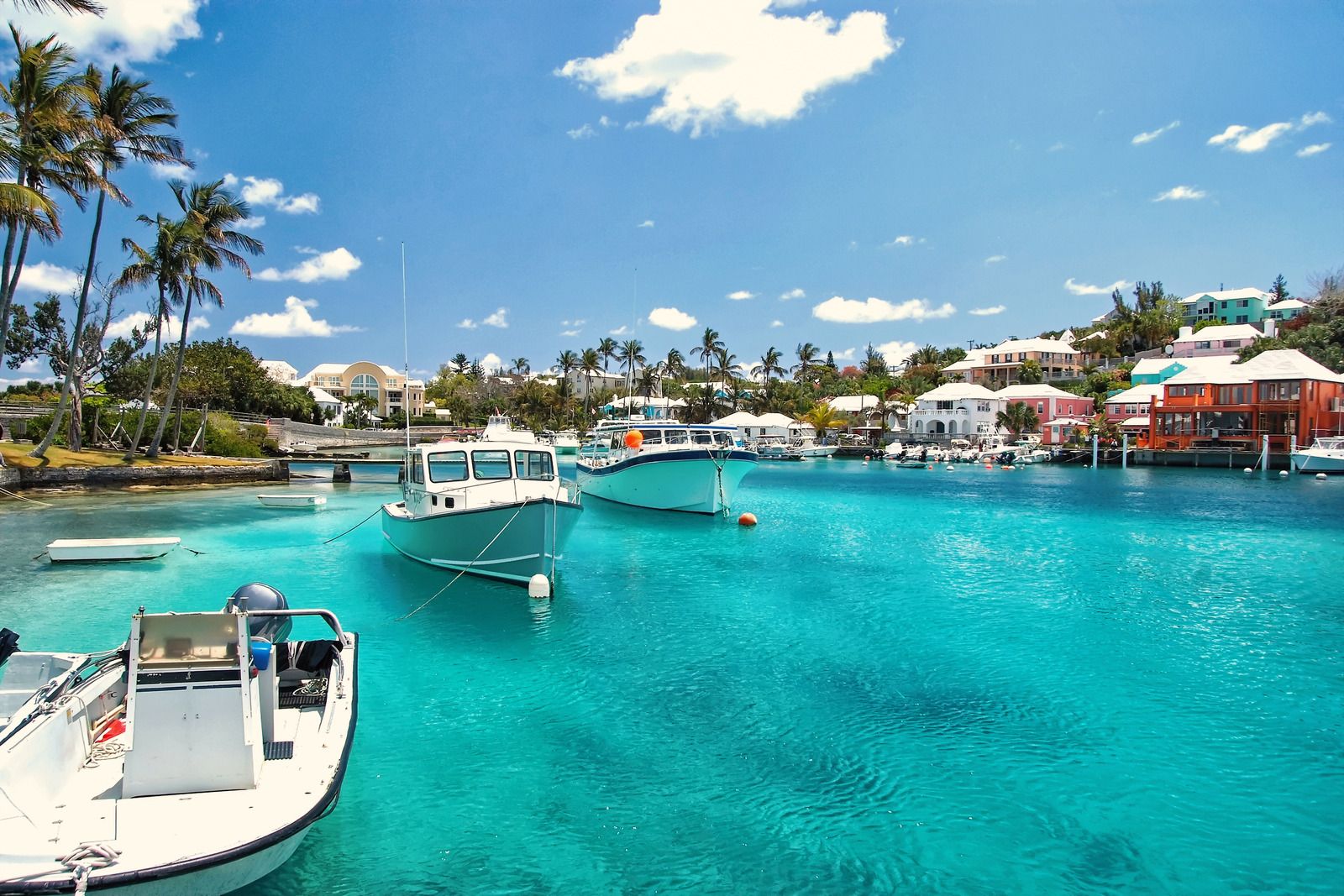


Mobile data in Bermuda: what to expect
Bermuda is compact — a fishhook of islands barely 21 miles end to end — and its mobile networks comfortably cover that footprint with reliable 4G. For a visitor that means dependable data in Hamilton, around the historic UNESCO-listed town of St. George's, out at the Royal Naval Dockyard where the cruise ships berth, and along the famous pink-sand South Shore beaches. Pulling up a bus route, checking a ferry schedule or messaging home from Horseshoe Bay all work smoothly. A travel eSIM is genuinely worth it here precisely because Bermuda is a notorious roaming-bill trap: it's a long way out in the Atlantic, not on any EU or domestic roaming deal, so a home plan can cost a small fortune for a few days of casual use. An eSIM gives you a fixed price and connection the moment you land — and because Bermuda is a place people often visit for short, expensive stays, not wasting the first afternoon hunting for a SIM is its own reward.
Coverage across the islands
Given how small Bermuda is, coverage is reassuringly even. The main island chain — Hamilton, the surrounding parishes, the airport area and the connected islands linked by causeway and bridge — gets consistent signal end to end. The two anchor towns, Hamilton and St. George's, are well served, as is the Dockyard at the western tip and the resort stretches in between. The honest gaps are minor and predictable: out on the water during a boat trip, while snorkelling off a reef, or kayaking the inlets, signal weakens, and a few sheltered coves and the inland nature reserves can dip. But you're never far from coverage on an island this size, and the bus-and-ferry network that most visitors use stays comfortably within range. For a day out on a boat or a self-drive on a rented twizzy, download your maps first and you'll be set.
How much data you'll need
Bermuda is a light-data destination — most visitors use WhatsApp and iMessage, Google Maps for the pink buses and ferries, Instagram for those beach shots, restaurant bookings, and maybe a weather or tide app to plan the day. A long weekend is comfortable on around 2-4 GB. A full week of beaches, the Dockyard and Hamilton lands near 5-10 GB. If you're streaming in the evenings, joining a work call, or tethering a laptop from your hotel balcony, size up. The plans above show what's live; start mid-range and top up if you find yourself watching more video than planned — it's faster than guessing high.
Keep your number and WhatsApp
No need to abandon your home number. On a dual-SIM phone the eSIM carries data while your normal SIM keeps calls, SMS and bank verification codes working, and WhatsApp stays on your existing number so people reach you the usual way. Just switch your home SIM's data roaming off — in an expensive roaming market like Bermuda, that single toggle is exactly what stops a quiet, costly bill building in the background while the eSIM handles everything you actually use.
Before you fly
Confirm your phone supports eSIM first — most iPhones from the XR onward, plus recent Samsung Galaxy and Google Pixel models; our compatibility checker verifies it in seconds. Install on home Wi-Fi a day or two before departure; the plan stays dormant and switches on only when you first connect in Bermuda. It activates as soon as you land at L.F. Wade International (BDA), so you can sort a taxi or check in with your hotel before you've left the terminal. Note that Bermuda sits in the Atlantic rather than the Caribbean, so it isn't covered by Caribbean-wide regional plans — a dedicated Bermuda plan is the right fit.
Arriving by cruise?
Many visitors reach Bermuda on a cruise from the US east coast, and a fair share continue on to the Caribbean afterwards. An eSIM is perfect for the Bermuda leg — install it before you sail, and it sits dormant until the ship docks and you step ashore at the Dockyard or Hamilton, switching on automatically without you touching a setting. Just remember it works on land, not on the open-water legs between ports. If your cruise also calls at, say, the Bahamas, that's a separate network and a separate plan — load one for each destination you'll actually spend time in, and they'll each wake up as you arrive.