








Using mobile data in Antigua and Barbuda: what to expect
For a twin-island Caribbean nation, Antigua and Barbuda is comfortably connected. The two regional operators, Flow (Cable & Wireless) and Digicel, run solid 4G/LTE across the populated parts of both islands, and because the developed footprint is concentrated, the network reaches the places visitors actually go. For the way people travel here, that's plenty of bandwidth: finding one of Antigua's famous 365 beaches on Maps, messaging a catamaran skipper on WhatsApp to confirm a sailing, posting from the restored Georgian dockyard at Nelson's Dockyard, and checking the short flight or ferry connection over to Barbuda. A travel eSIM is the easy route here — there's no kiosk queue at the airport after an overnight flight, activation is instant, and you sidestep the roaming surcharges a home carrier would otherwise tack onto a Caribbean week. You step off the plane already online and ready to arrange a transfer or pin your villa on the map.
Coverage across both islands
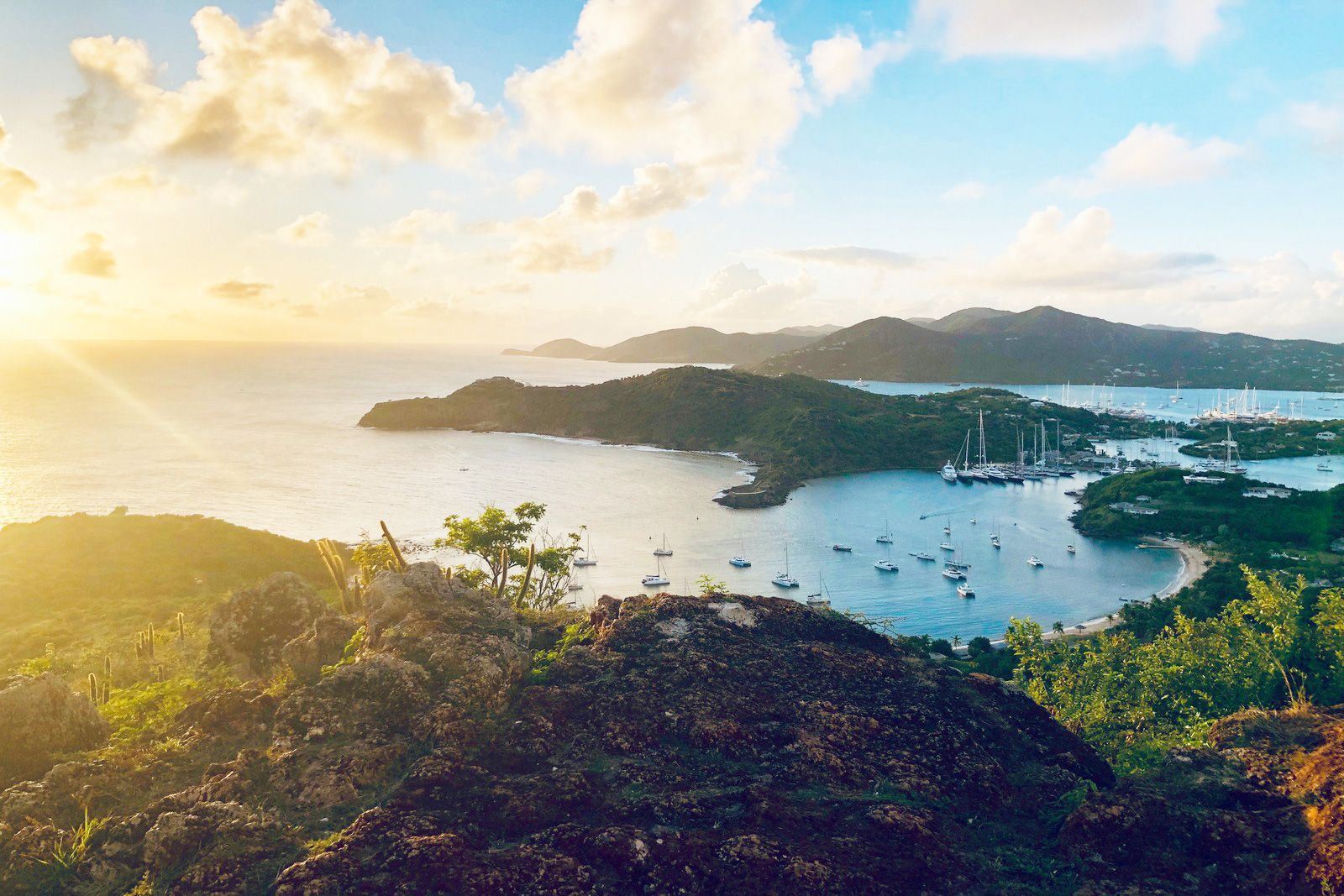
On Antigua, expect reliable signal across the capital St. John's, the cruise port at Heritage Quay, the historic English Harbour and Falmouth Harbour area, Jolly Harbour on the west coast, the V. C. Bird airport district, and the main ring roads — plus most of the popular beaches along the west and south coasts. Barbuda, far quieter and much less developed, has coverage around its main settlement of Codrington but noticeably thinner service across its remote flats, the famous frigate-bird sanctuary in the lagoon, and the long, empty pink-sand beaches. The genuine gaps are the open-water ferry and charter crossing between the two islands, boat trips out to offshore reefs and cays, and the more isolated reaches of Barbuda. Antigua's hilly interior around Boggy Peak (Mount Obama) and the inland villages can also be weaker than the coast, though you'll rarely be up there for long. The fix is the same one that works on any island: download an offline map before a Barbuda day trip or an island-circling sail, and a brief dropout never becomes a problem.
How much data you'll need
This is a light-data destination built on messaging, maps and photos — WhatsApp to coordinate with skippers and tour operators, Google Maps to get around, Instagram for the beaches, and the odd video call home. A rough guide: a long weekend is very comfortable on 2-3 GB; a full week of beaches, sailing and a Barbuda excursion usually fits inside 5-8 GB; and only heavy streaming, hotspotting a laptop, or remote work pushes you toward an unlimited-style plan. The plans above show the live options — start small, since a top-up takes only a moment if you run low and there's little reason to pay ahead for data the island's pace won't make you use.
Keep your number and WhatsApp
You don't have to drop your own number to get a local data line. A modern phone runs the eSIM next to your normal SIM in dual-SIM mode: the eSIM carries data while your home number keeps calls, SMS and bank one-time codes flowing, and WhatsApp stays on your existing number with nothing to change — handy when a charter company or villa host needs to reach you at short notice about weather or timing. Just switch your home SIM's data roaming off so it can't quietly run up charges while the eSIM does the work.
Before you fly
Check your phone supports eSIM first — most iPhones from the XR onward, plus recent Samsung Galaxy, Google Pixel and Honor devices; our compatibility checker confirms it in seconds. Buy and install on home Wi-Fi a day or two before departure; the plan stays dormant and switches on automatically when you land at V. C. Bird International (ANU) on Antigua or the Barbuda airstrip (BBQ). Doing the install on home Wi-Fi means the part that needs a steady connection — downloading the profile — is finished well before you fly.
Sailing the Leewards?
If Antigua is one stop on a wider eastern-Caribbean route through nearby Saint Kitts and Nevis or Saint Lucia, a separate country eSIM for each island keeps things simple and cheap. For a stay on these two islands alone, the local country plan is the most direct way to stay online.